

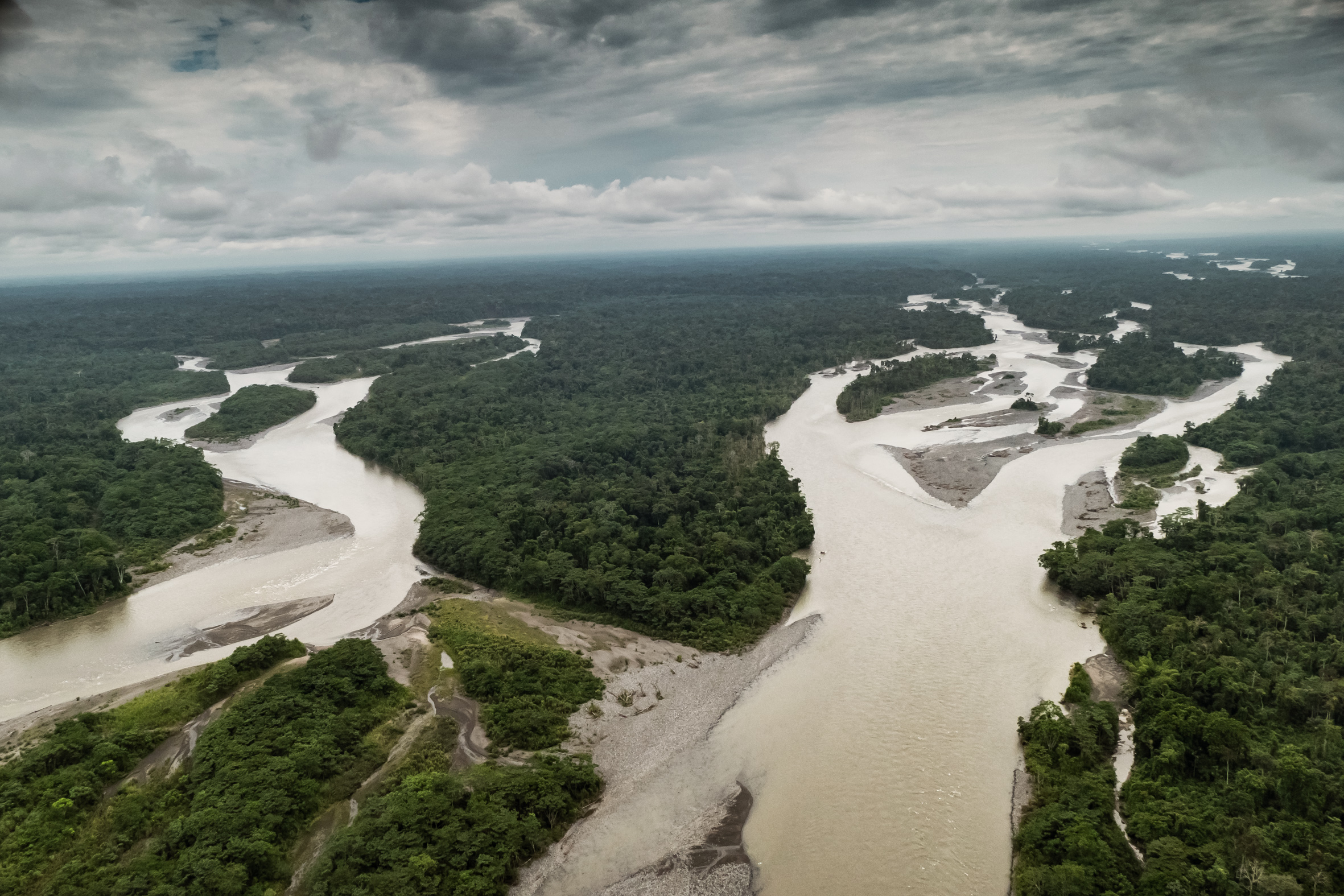
The lifeblood of our planet runs right through the middle of the Earth: the tropical rainforest. This barometer for all life is declining and declining.
In Asia, the tropical rainforests have been almost completely destroyed, and in Africa, they have been largely destroyed. The last large rainforest that we as humanity still have is located in the Amazon basin of South America. It is called “the lungs of the world.” But even this lifeline is threatened by daily overexploitation and devastating fires.
The Amazon basin is home to the largest and most important forest ecosystem in the world. It preserves and renews one-third of the Earth’s total fresh water. This last reserve is becoming increasingly important, as two-thirds of humanity already have insufficient or no access to clean drinking water. The influence of the ecological balance in the tropical rainforest on our environment is undisputed. Intact tropical forests are among the most efficient repositories of CO2 and other climate-damaging gases. The devastating effects of deforestation on the global climate can now be felt everywhere. Only intact, functioning forests promote a healthy global climate, sufficient clean drinking water, adequate food, and thus meaningful life and work for future generations.
We must and want to preserve this!

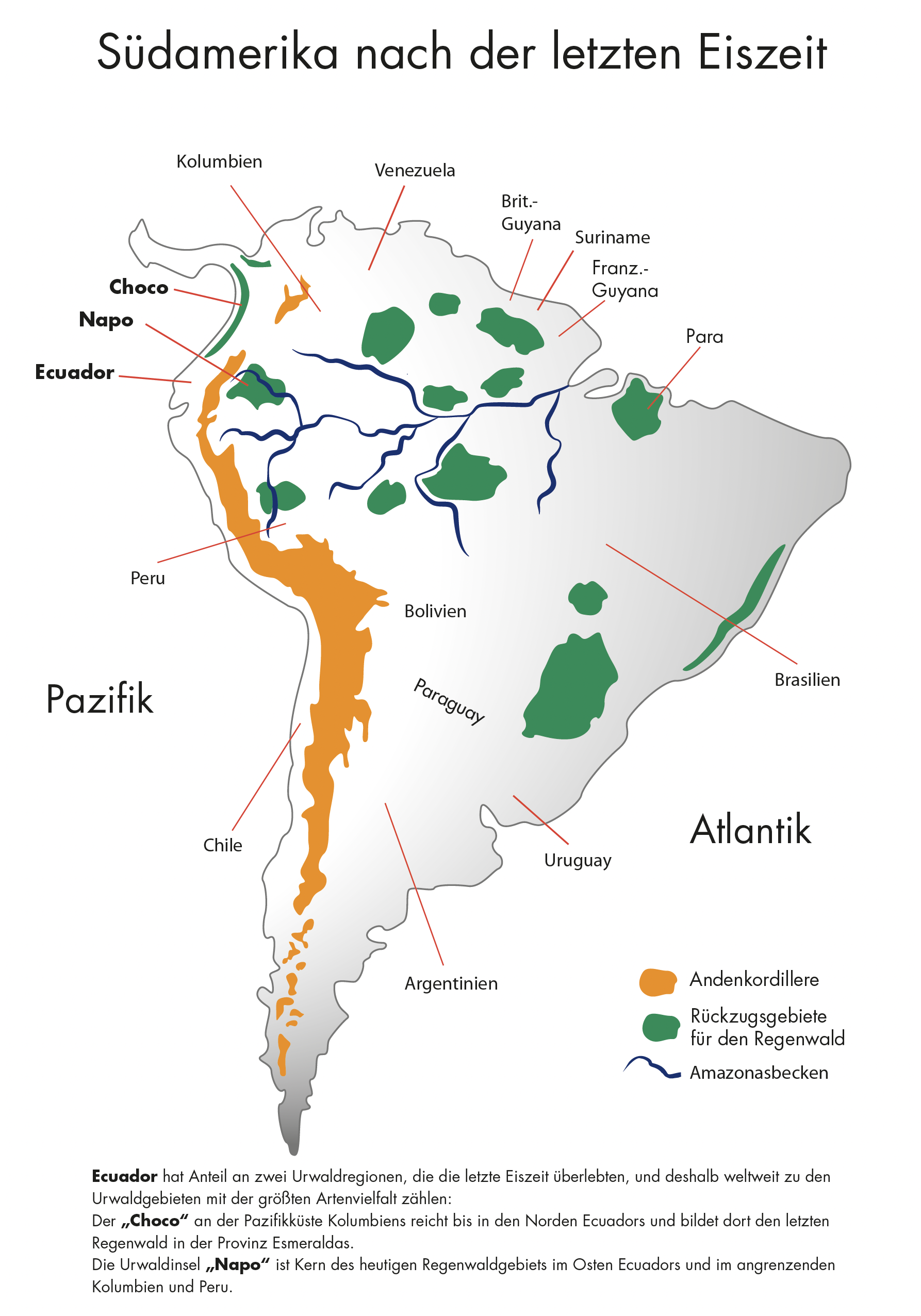
The last ice age brought major changes to the Amazon basin. The tropical rainforest survived only in a few refuges, the “green islands” on the map. One of these is the “Napo” region, in the southwest of which we are working.
This forest area in the border triangle of Colombia, Ecuador, and Peru survived the last ice age. Due to geological influences and its proximity to the Andes Mountains, this region has a particularly diverse array of plant and animal species, ranking among the top 5 worldwide.
- Amazonia – Source of Life
- The largest river and forest area on Earth is located in the Amazon Basin, which is the most important forest ecosystem for life on our planet.
- AMAZON means WATER – FOREST – CLIMATE – FOOD – LIFE
- AMAZON – the lifeblood of our planet
- AMAZON – the lungs of the world
- AMAZON – the pharmacy of humanity
- AMAZON – the database of the future
- The Amazon basin covers approximately 7 million km², about 5% of the Earth’s land area. Equatorial tropical rainforest covers this lowland plain.
- Over 1,000 tributaries form the Amazon River, which stretches 6,788 km from the Andes to the Atlantic Ocean.
- Ten tributaries are among the 25 most water-rich rivers in the world.
- The Amazon basin holds and renews one-third of the Earth’s fresh water and produces one-fifth of our oxygen.
- The forest purifies the atmosphere of climate-damaging gases and is one of the most efficient CO2 reservoirs.
- The Amazon region is home to the greatest biodiversity, which is still largely unexplored: about a quarter of all living animal and plant species, including more fish than in all other rivers in the world combined.
- Amazonia is home to 400 indigenous peoples, around two million people.
- These indigenous peoples are the best guardians of the forest, an irreplaceable “ranger force” protecting our last rainforest.