


CULTURE
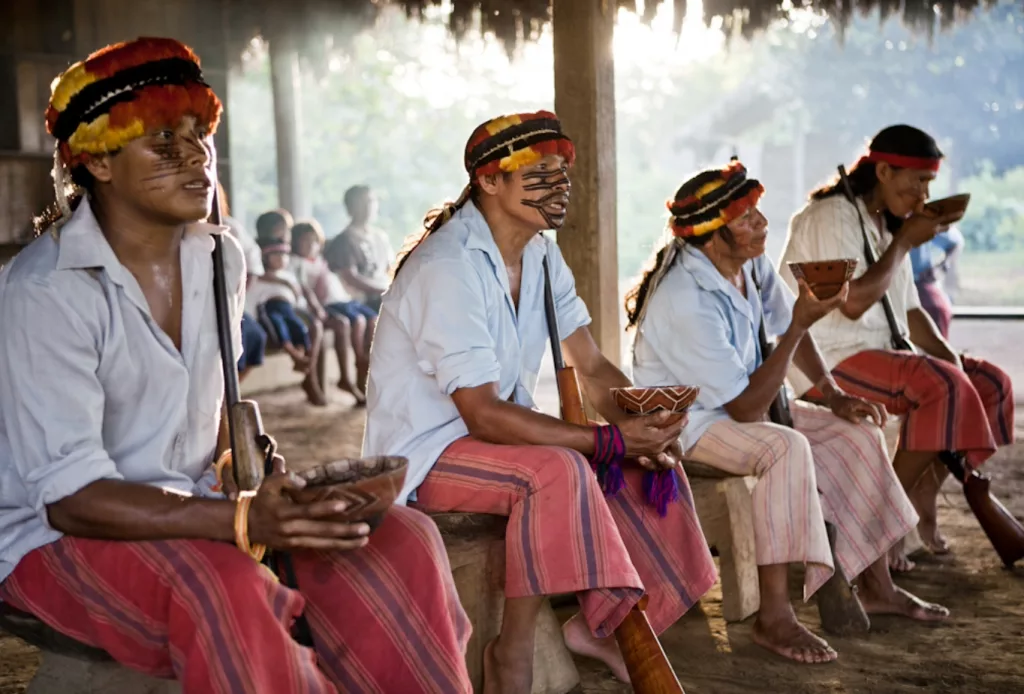
Due to various influences from civilization, the culture of the forest peoples has been suppressed or has almost disappeared. This has had devastating consequences for the indigenous peoples and the forest population in the Amazon region. AMAZONICA promotes the revival and cultivation of the respective culture as an indispensable basis for the identity awareness of these peoples and as a change agent for future healthy living and working in their ancestral lands.
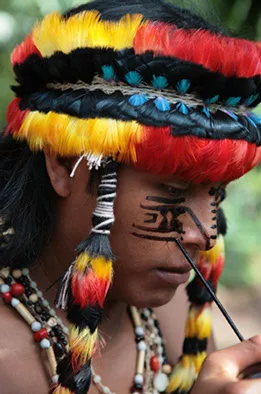
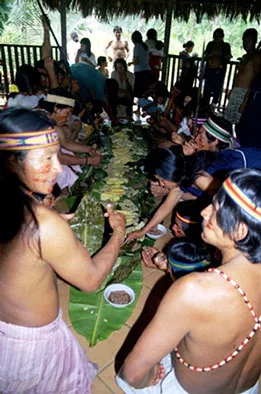
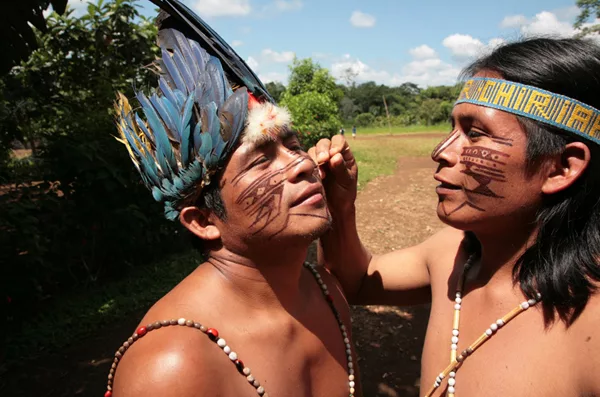
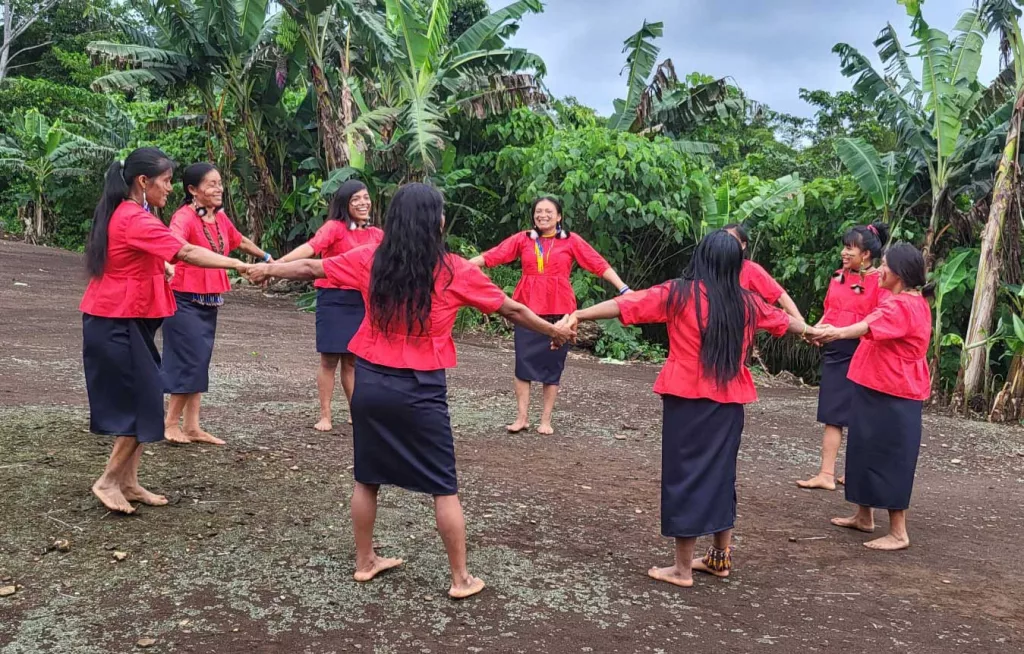
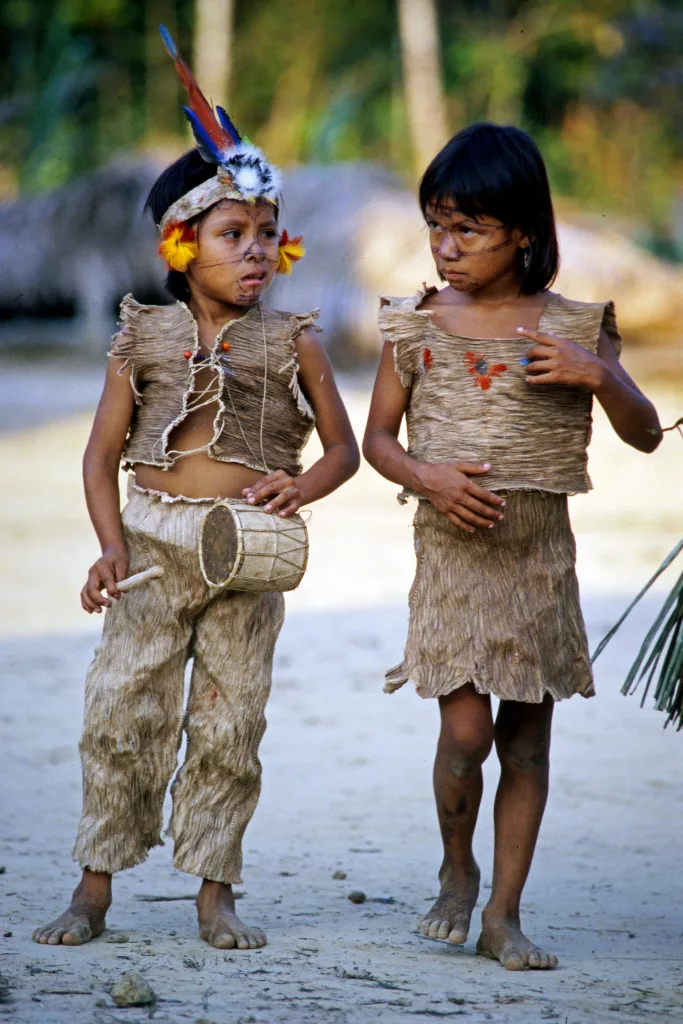
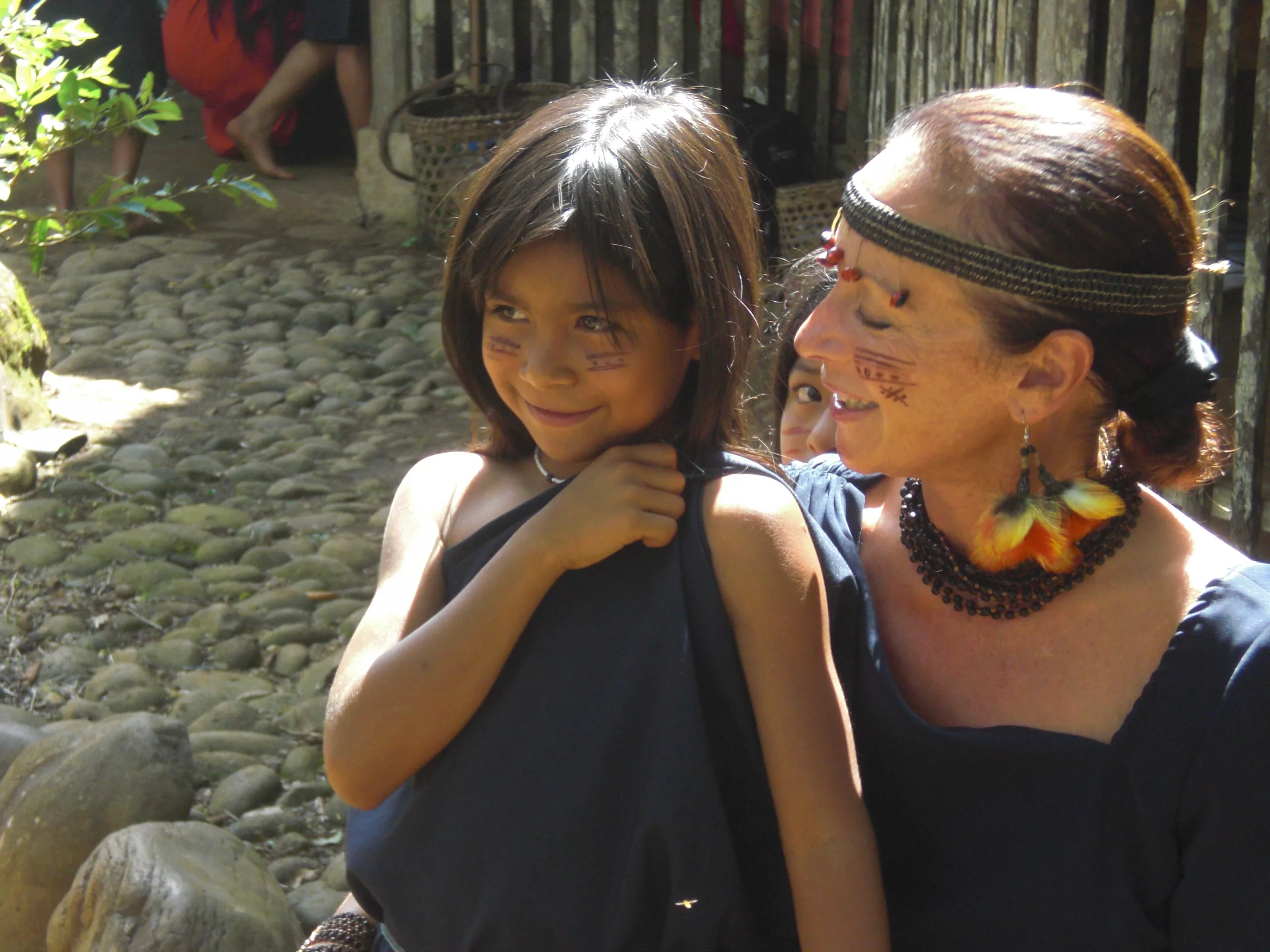

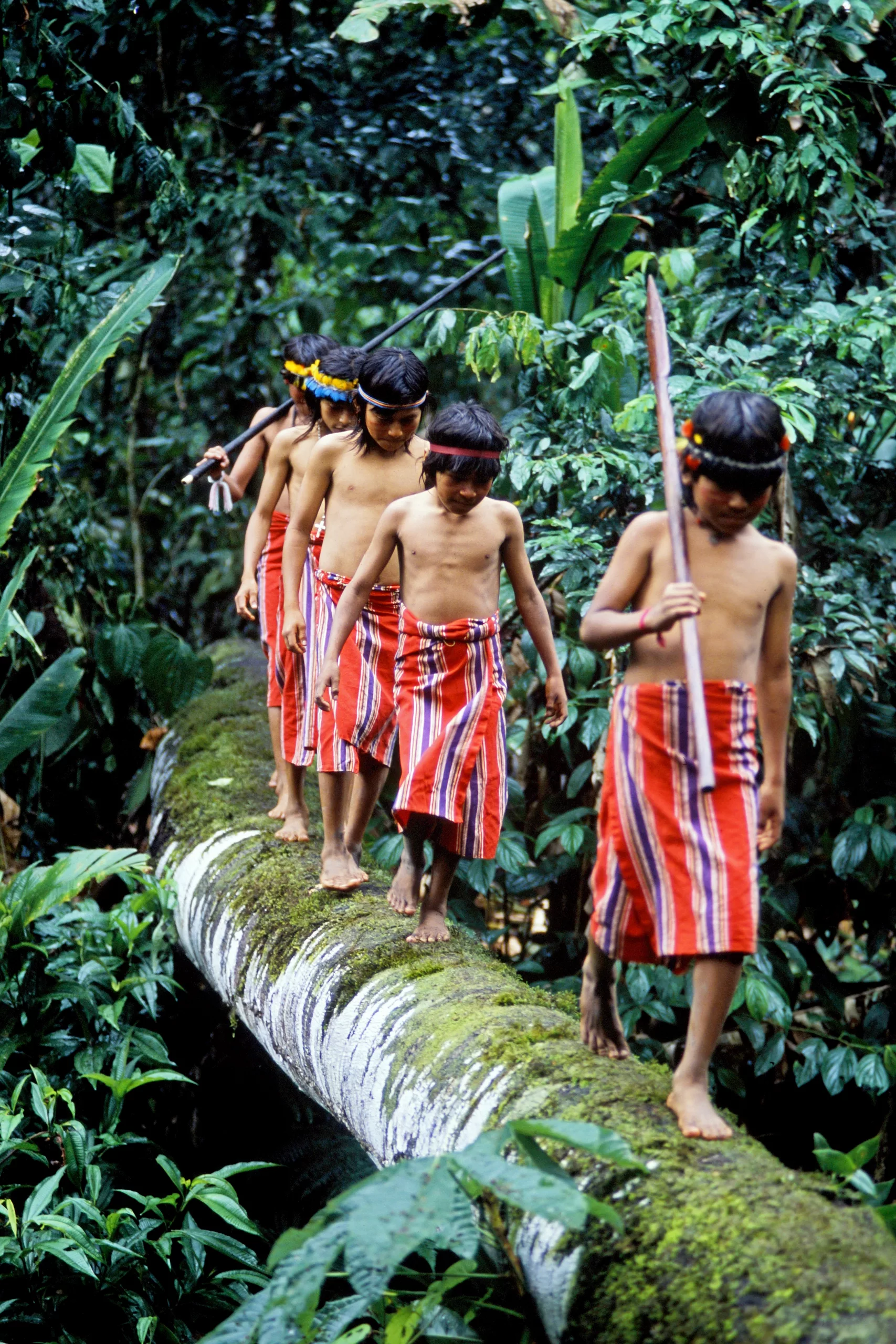
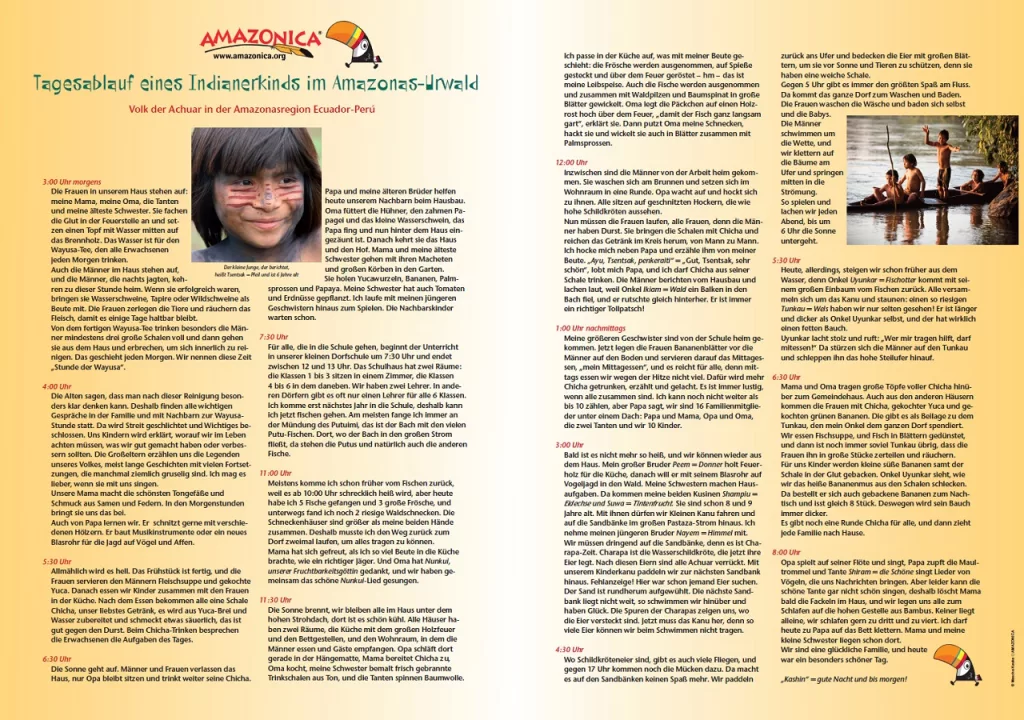
The young “Tsentsak” describes the daily routine in his Achuar village on the great Pastaza River. His name means “arrow”.
The measures in detail
Cultural lessons
We set these up at the elementary school with the help of the “elders”, the grandparents of the families who still know the traditions. This concept has proven its worth. That is why we always start working with new villages in this important area (in addition to drinking water supply, horticulture, and small animal husbandry).
Arts and crafts
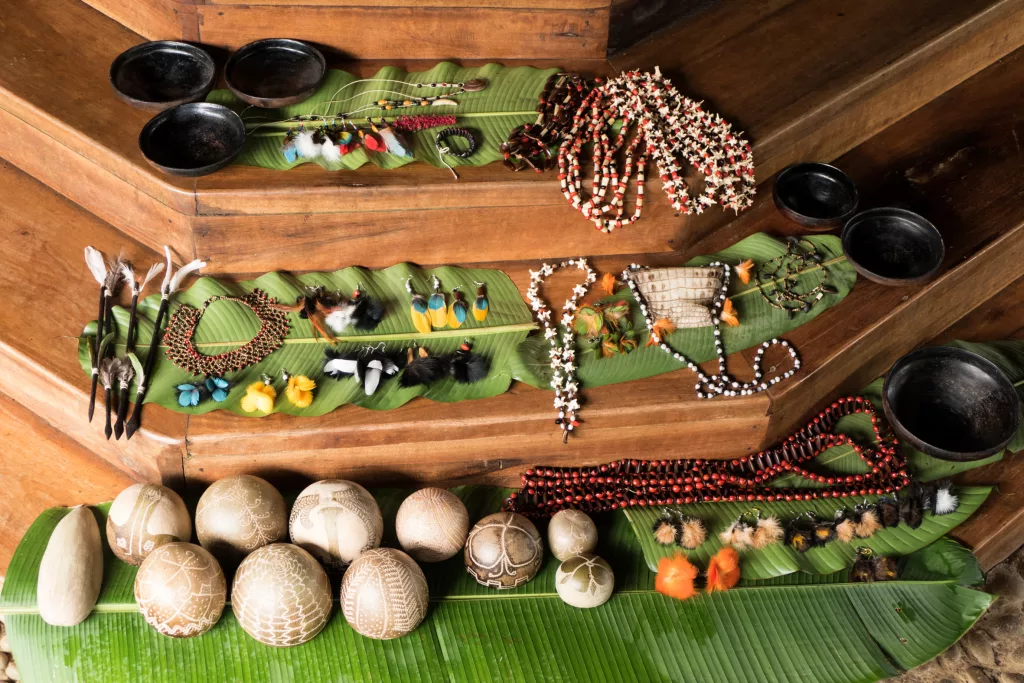
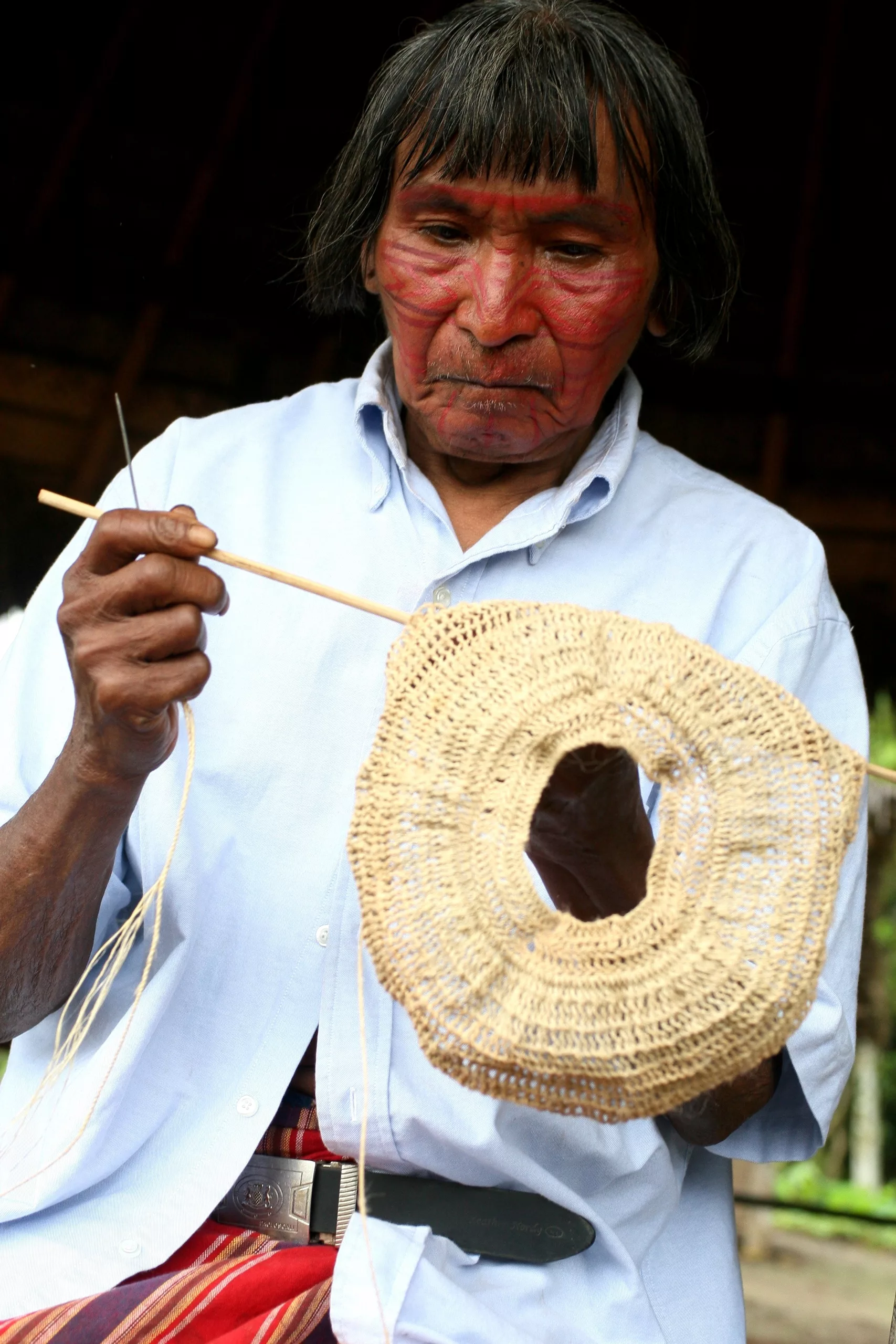
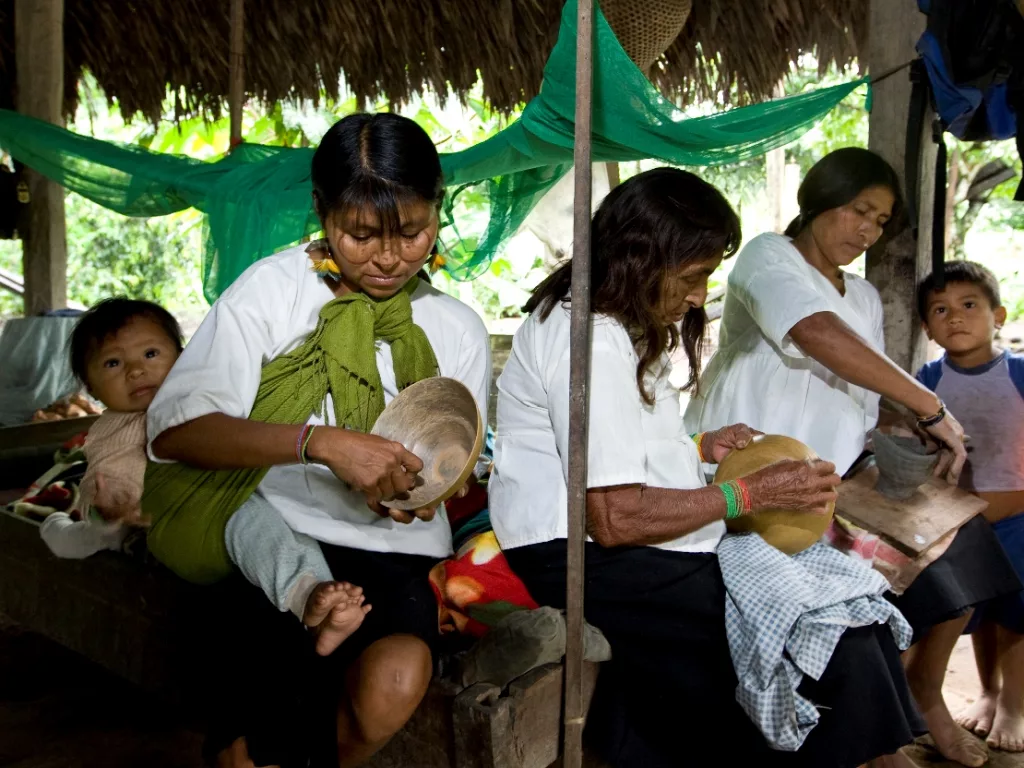
Depending on the culture of a people, the handicraft activities of women and men are quite different.
Only pottery is almost always done by women, and carving is done by men. Jewelry making, weaving, and braiding are handled differently. The items are useful and decorative in the villagers’ daily lives and can be sold. The employees of AMAZONICA and visitors to the academy are among the good customers.
Dances, songs, musical instruments
These traditions are also not the same for every community. While the Achuar, for example, have no festivities apart from celebrating the return of their men after a victorious campaign, the neighboring Shuar never miss an opportunity to celebrate. Whether the fruits of the chonta palm are ripening or a snakebite has been successfully treated, everything has its celebration with a traditional sequence of events.
Dances and songs are often unaccompanied by music. The women sing to their own dance. Self-made musical instruments are played by the men, mainly flutes, hand and jaw drums, and stringed instruments reminiscent of a violin are probably copies of the instruments brought by the missionaries.
The legends
The men, in particular, are fantastic storytellers, telling legends about gods, souls, people, and animals from their original world of belief, animism. These are long serialized stories, like from 1001 Nights, only often much more gruesome. The oral transmission and recording of these legends are of particular importance because they clearly show the close cooperation and interaction between man and nature. No true forest dweller can be imagined detached from nature and the forces of the primeval forest. This is his cosmos.
Traditional rites and social practices
As in other cultures around the world, rituals have evolved from tried-and-tested practices and local requirements. Natural medicine, the relative isolation in the forest, the need to avoid inbreeding, and other factors have had a particular influence. Knowing and maintaining spiritual rites and traditional social practices is fundamental to life in the forest. Of course, some customs need to be adapted and possibly harmonized with contemporary life in forest communities.
Cultivating one’s own language
One’s own language is an indispensable part of every living culture. For peoples who are only just integrating into civilization, it is increasingly important that they can formulate new knowledge, including higher school knowledge, technical terms at work, and modern communication, in their mother tongue. The Achuar language, for example, has so far been passed on only orally, a language with complex grammar and a particularly rich vocabulary.
Integration of all age groups
In the past, extended families lived in harmony, regardless of the age of the members. Due to the destruction of the traditional way of life and the state education of young people, an ever deeper divide is forming between “culture” and “modernity”, between “old” and “young”, to the detriment of all. AMAZONICA closes this divide and prevents it by revitalizing culture and the associated revaluation of the older generation. Our motto: “The traditional knowledge of illiterate grandparents is at least as valuable as their grandchildren’s high school diplomas!”
We would like to thank our friends and supporters






Would you like to get involved?
AMAZONICA Akademie gGmbH
Ostpreußenstr. 81
D-81927 Munich
Phone: 0049-(0)89-642 99 133
E-Mail: akademie@amazonica.org
amazonica.org
Navigation