


FAMILY AND VILLAGE
HEALTHY DEVELOPMENT NEEDS ROOTS
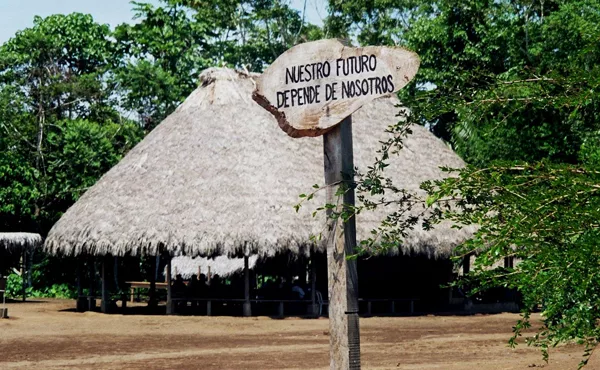
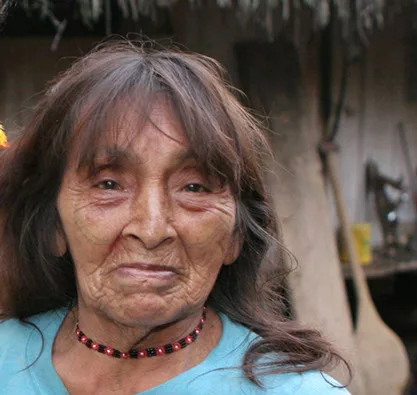
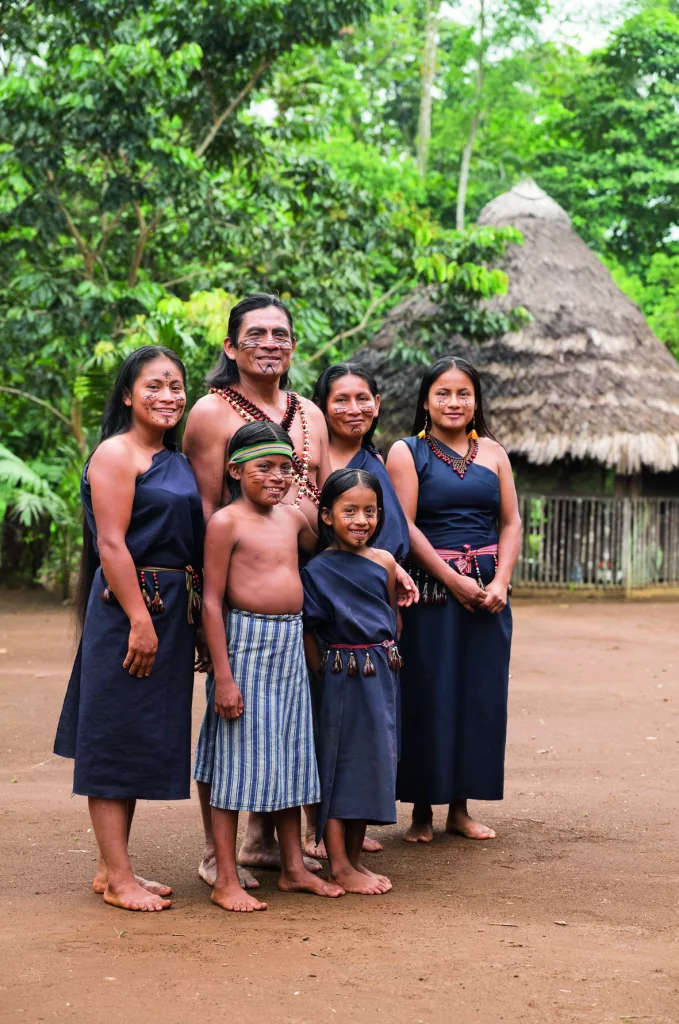
The extended families form the traditional basis of the indigenous peoples. It is important to work with them in order to improve the future prospects of the forest dwellers and implement new ideas. Today, the majority of families live in village communities, which is why AMAZONICA works from village to village with each individual family – it is laborious, but successful.
The development of forest communities serves to improve their livelihoods and, at the same time, contributes to the conservation of these peoples and the last great tropical rainforest of mankind.
Those who have work and income in the forest, and who have future opportunities for their children, do not need to plunder nature or leave their land.
AMAZONICA organizes and finances experts for training and advice, all the material that is not available in the forest, and the transport flights. The villagers do the work on site.
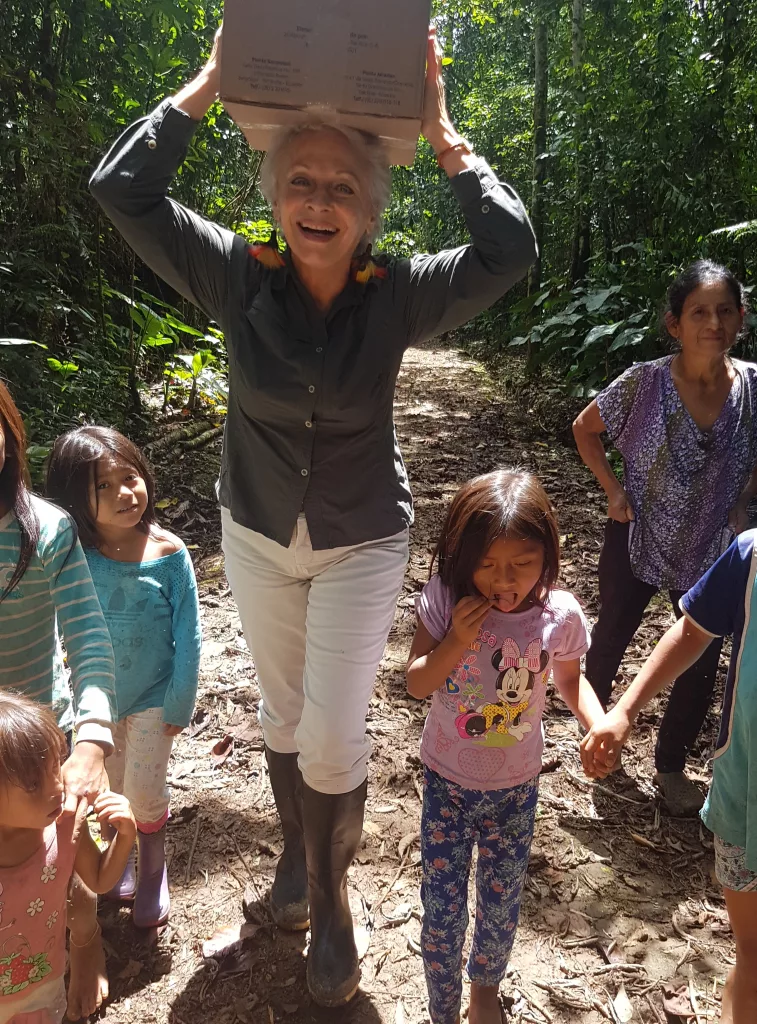
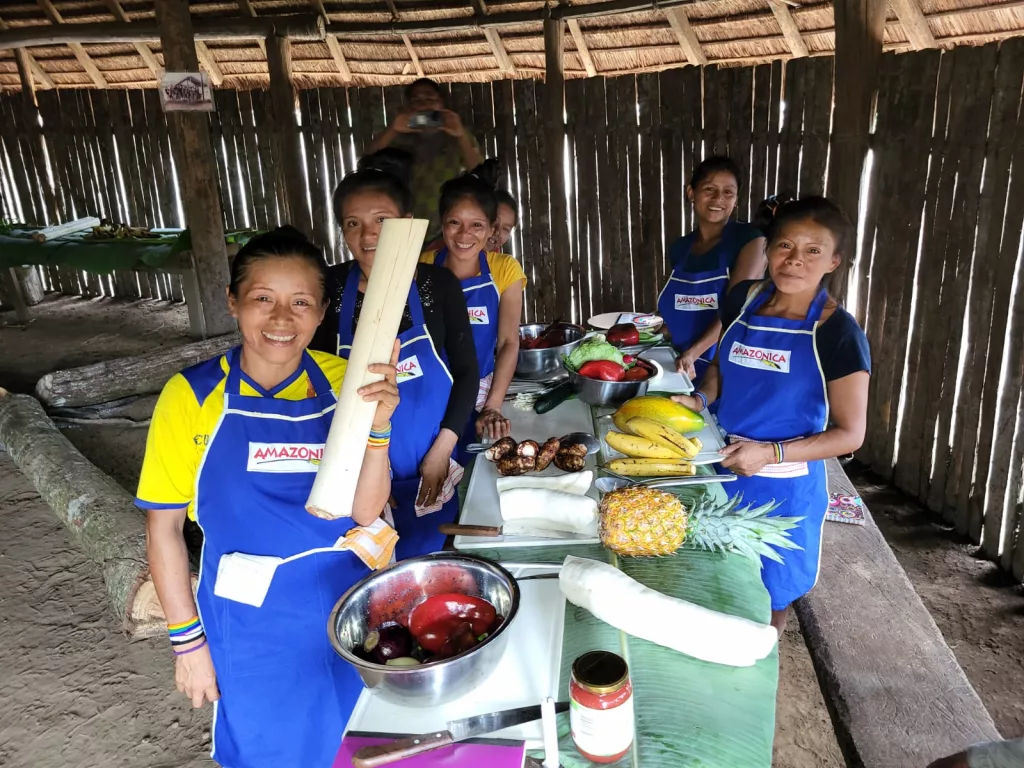
During each visit, i.e., at least twice a year, Mascha Kauka gives courses on cooking, hygiene, waste recycling, communication, and dealing with the world outside the forest.
Water supply
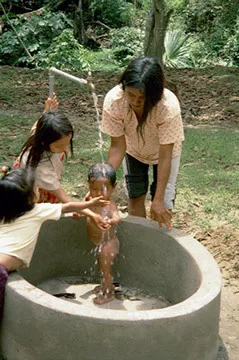
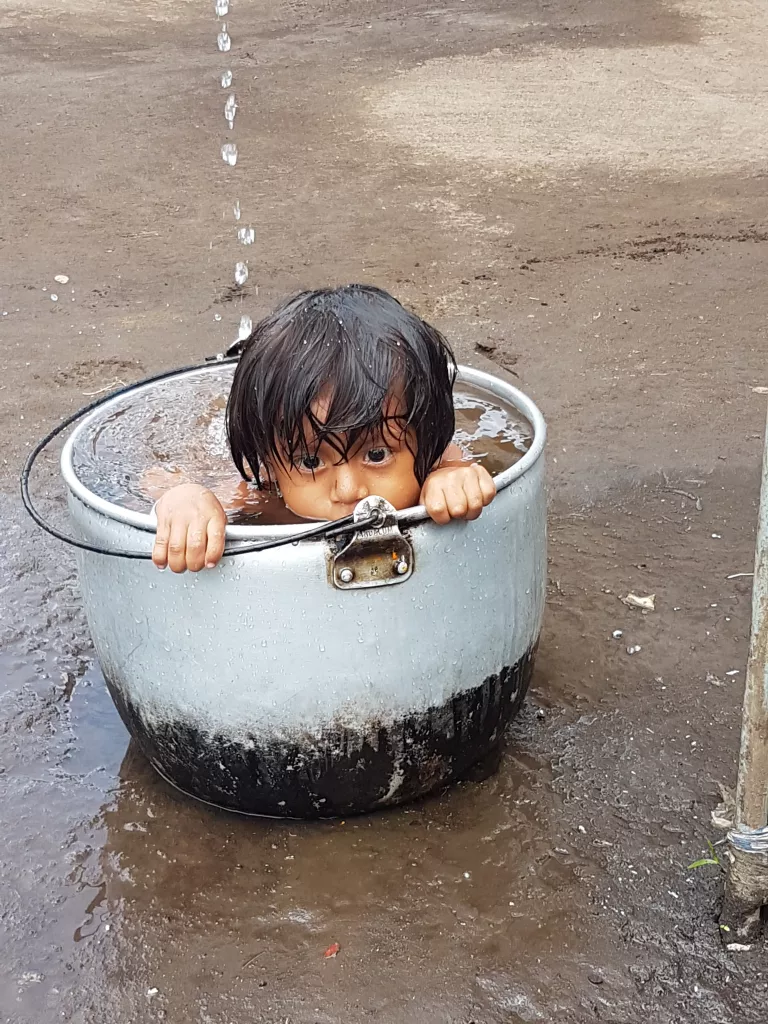
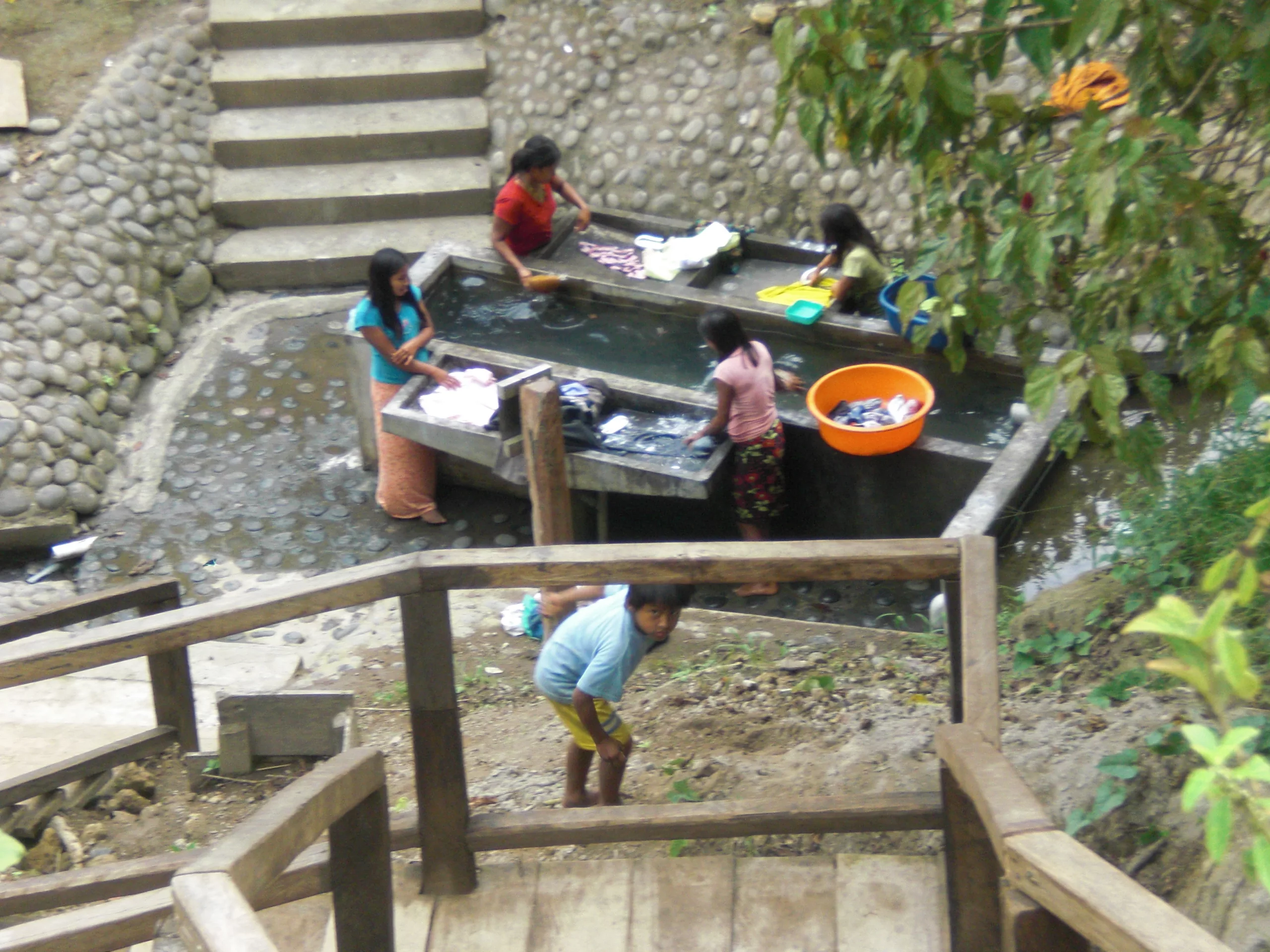
Clean drinking water and sufficient water for work are not a matter of course in the rainforest. The large rivers that flow from the Andes and thus from civilization into the Amazon basin are the cesspools of cities and industry.
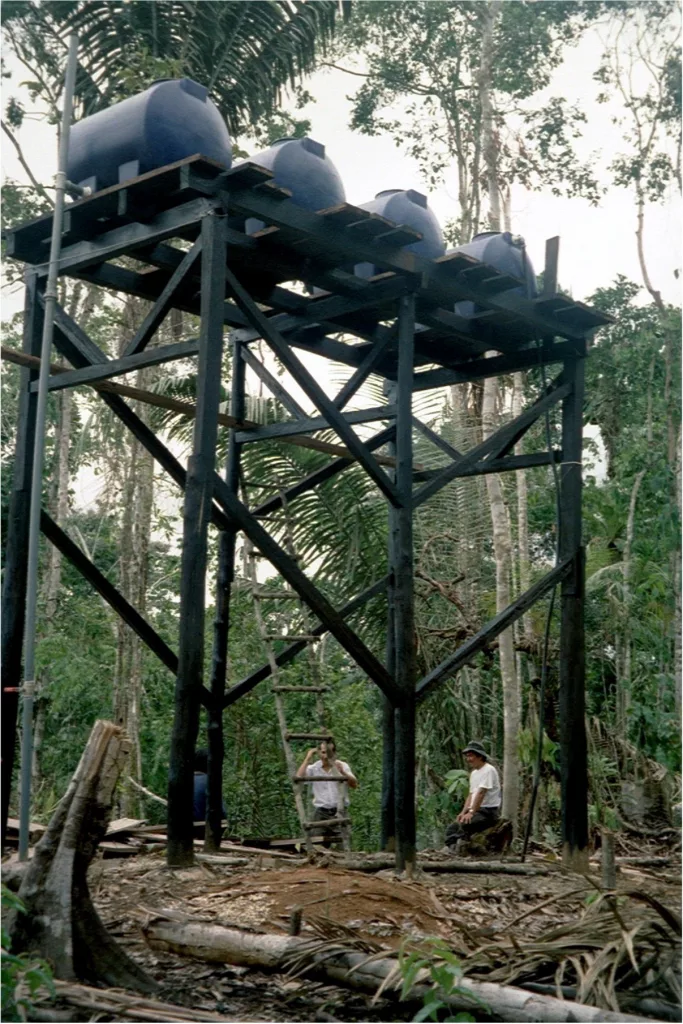
However, every community that wants to develop needs enough clean water in the village. To achieve this, higher springs are tapped in the hills and pipes are laid to the villages. In the flat floodplains of the large rivers, the spring water has to be pumped up to water towers. This is done using solar energy.
Hygiene and waste disposal
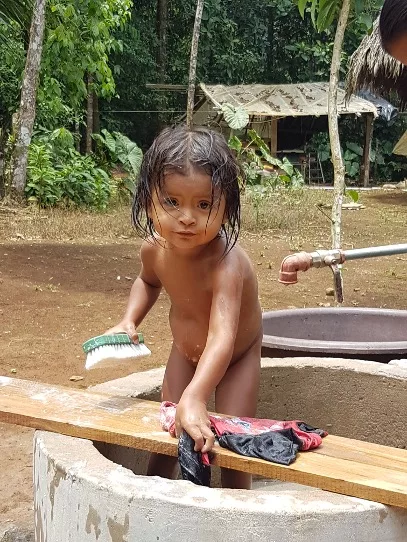
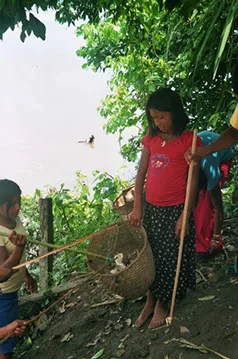
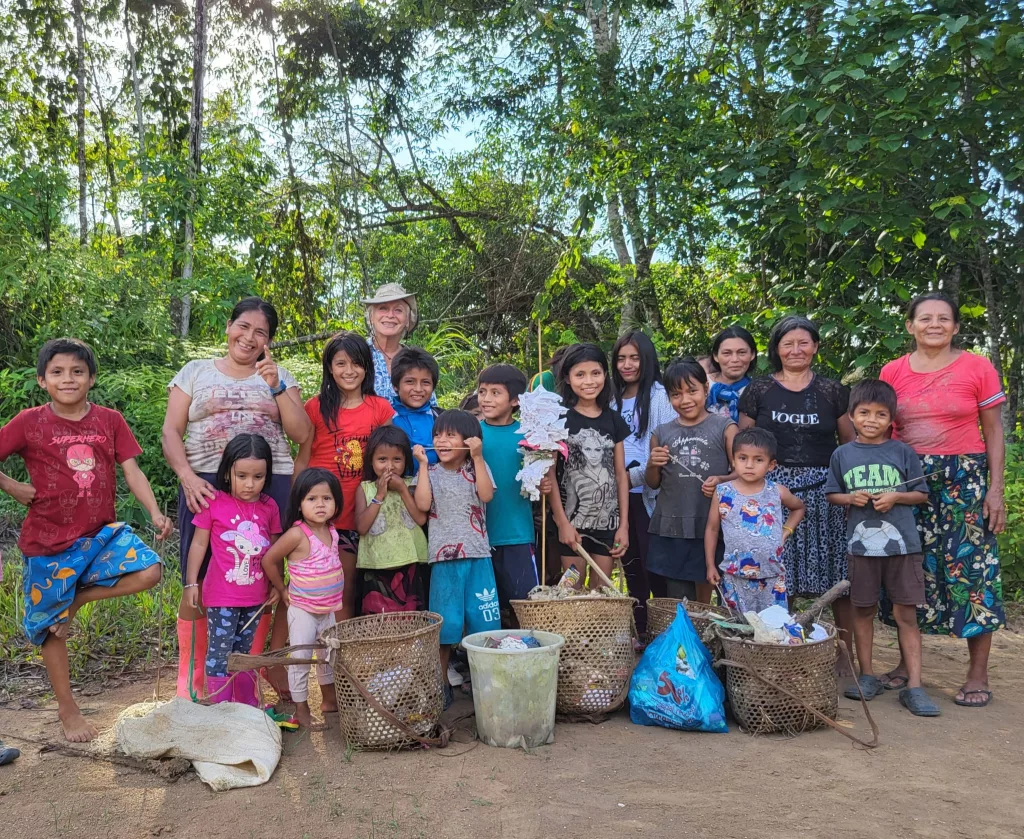
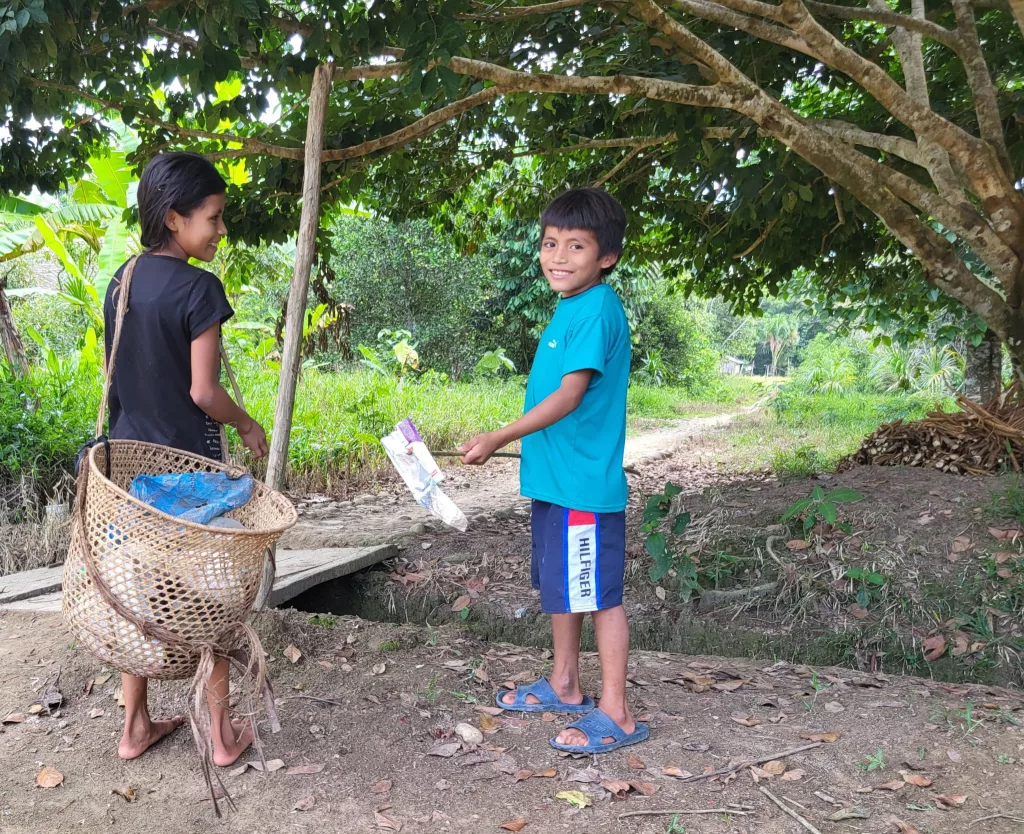
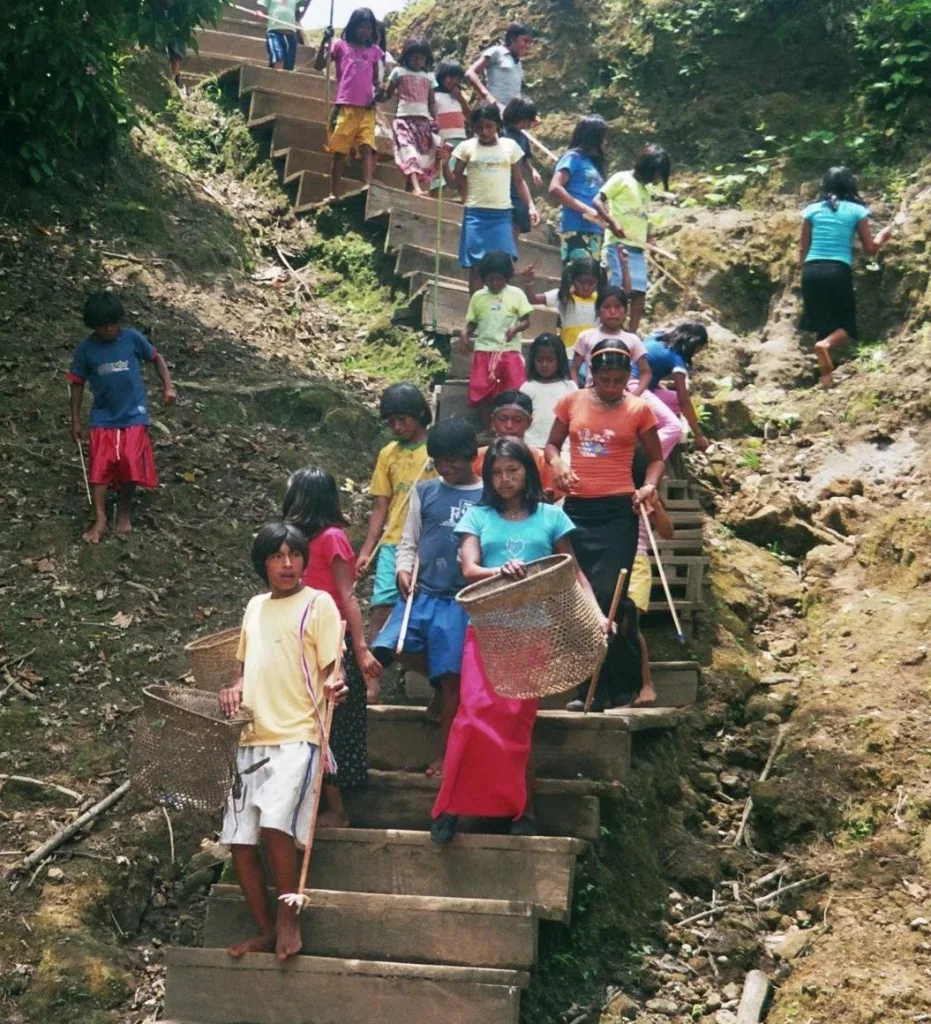
Personal hygiene and cleanliness in houses and the village are prerequisites for healthy living and working. In addition, the growing accumulation of waste is also a problem in the forest communities. Ecological waste disposal measures and hygiene advice from house to house and in schools are needed: Waste separation, composting, and disposal. Toxic waste and plastics are flown out of the forest by AMAZONICA. The elementary school children, equipped with skewers and baskets, clean their village and the riverbank once a week.
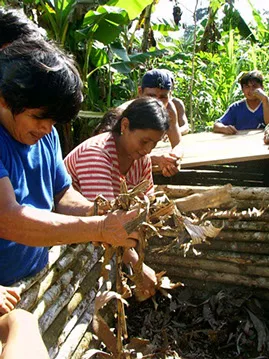
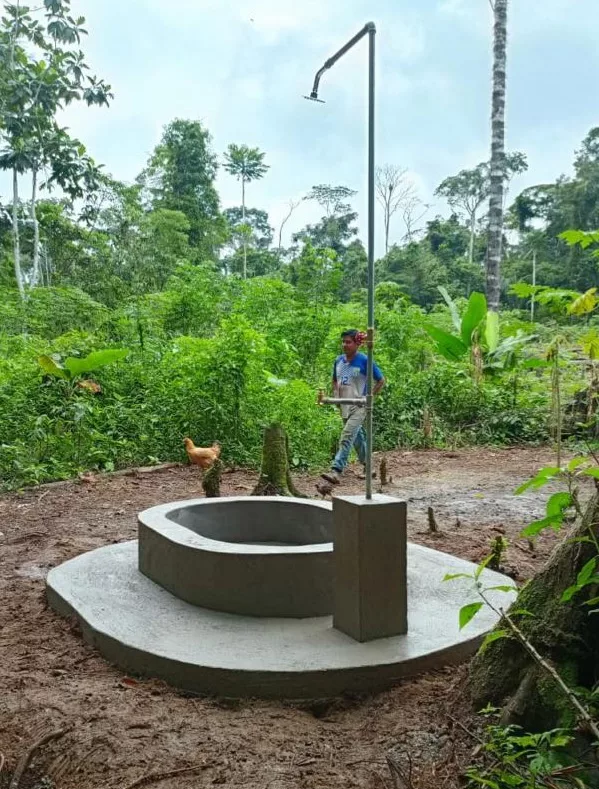
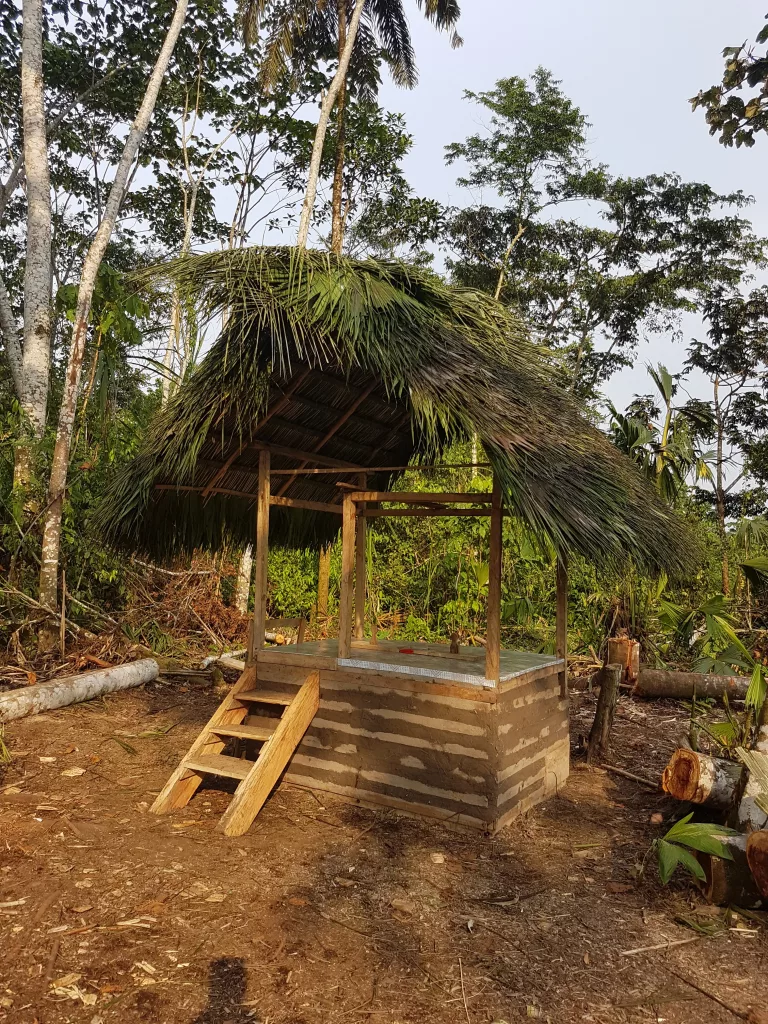
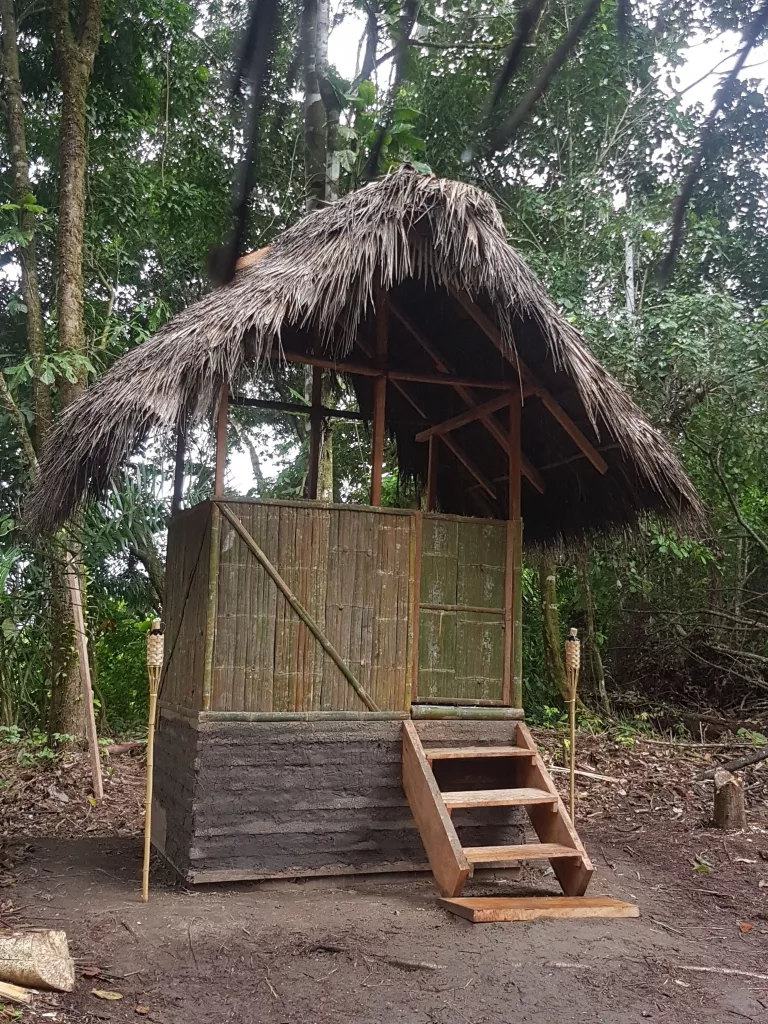
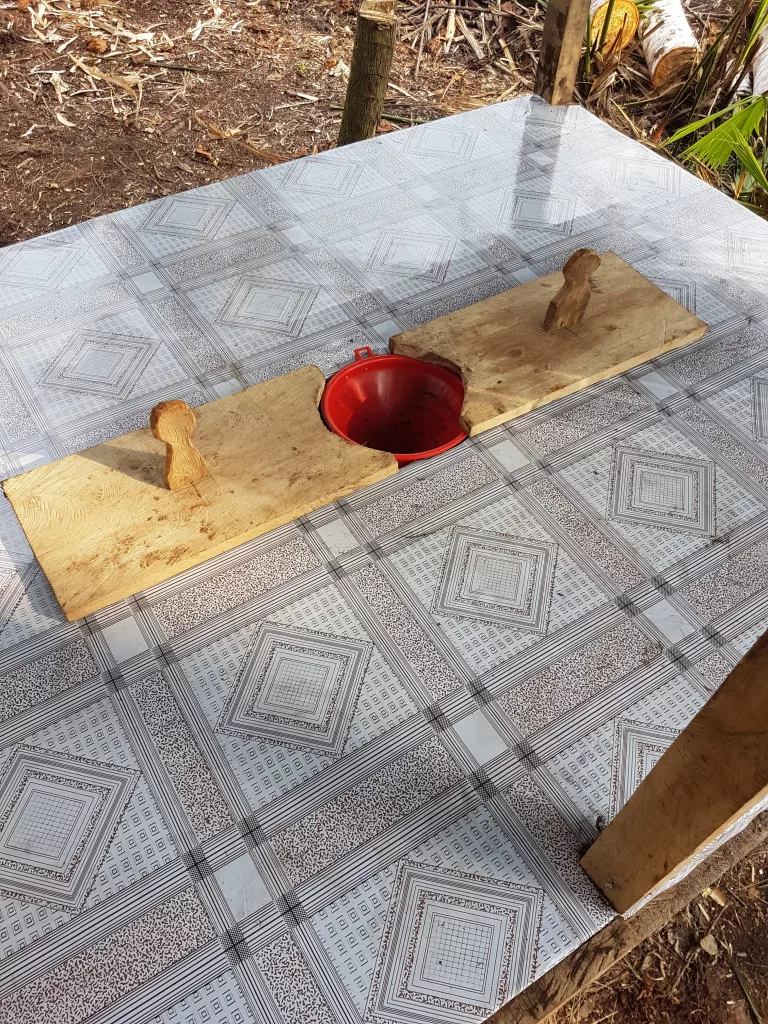
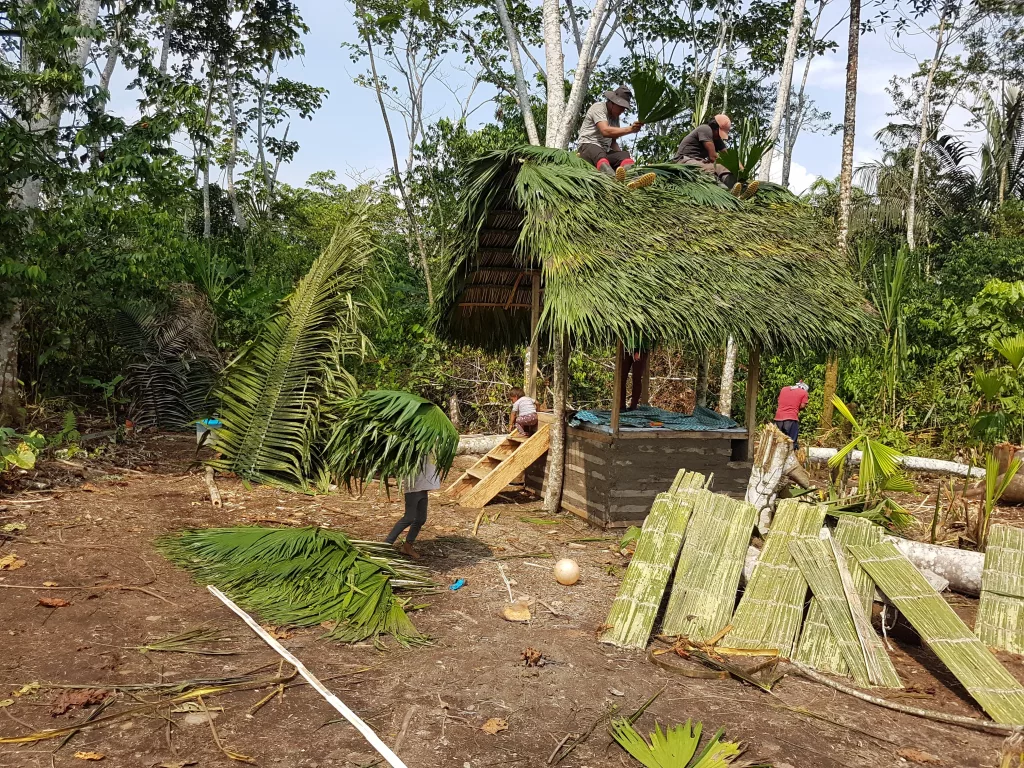
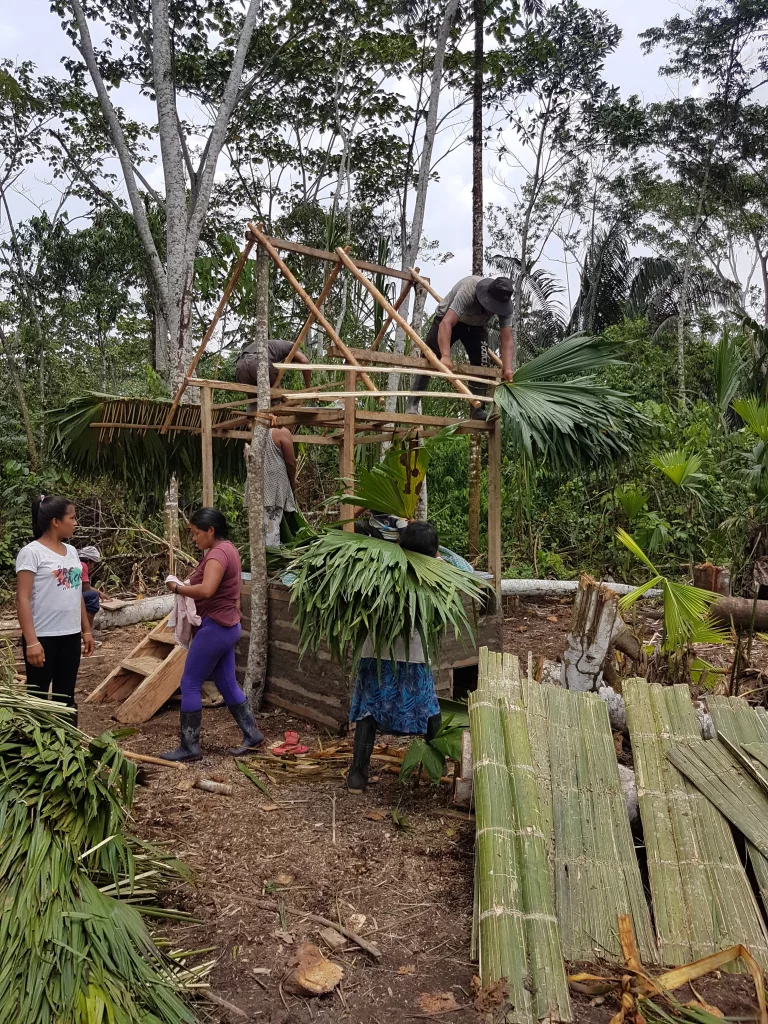
Dry (composting)toilets at each house are just as much a matter of course as waste separation. The pictures show how such a simple but perfectly functioning toilet house is built with the simplest of means. The highlight is the division of the block into two chambers, which are alternately filled with excrement, on which ash from the stove fire, sawdust, or dry leaves are scattered. The composting process takes 6-8 months. The large funnel in the middle is for urine and drains into a buried 10 m-long tube. It is perforated under the ground and distributes the urine evenly.
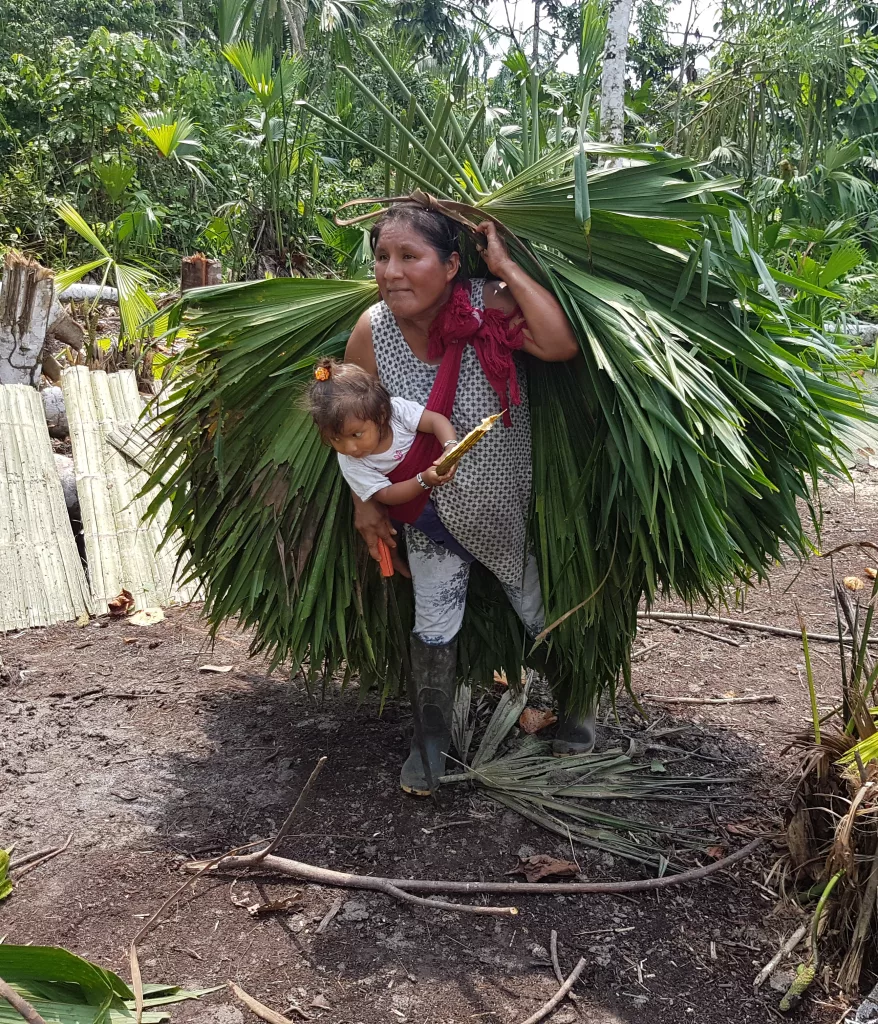
The building materials grow in the forest. AMAZONICA supplies oilcloth from the city for the floor, funnel, and tube.
The separation of feces and urine means there is no unpleasant smell, and the feces are neutralized by the ash. These outhouses do not smell, do not attract insects, and are easy to keep clean. Ideal!
Medical infrastructure
Water supply and hygiene measures are preventative measures. We have created a medical infrastructure to treat acute illnesses. This came about during the fight against the malaria epidemic from 2005 to 2007 > VIDEOTHEK/Webinar/Gegen Windmühlenflügel.
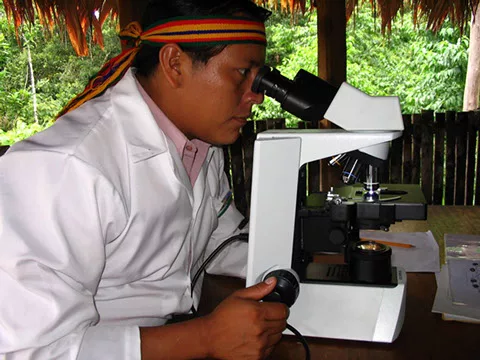
This basic care must, of course, be maintained and expanded. Each village is given a small medical station, and suitable villagers are trained as paramedics. However, AMAZONICA not only promotes conventional medicine, but also homeopathy and takes into account the traditional natural healing methods of the people. We have already financed several courses for prospective medicine men.
Horticulture and small animal husbandry
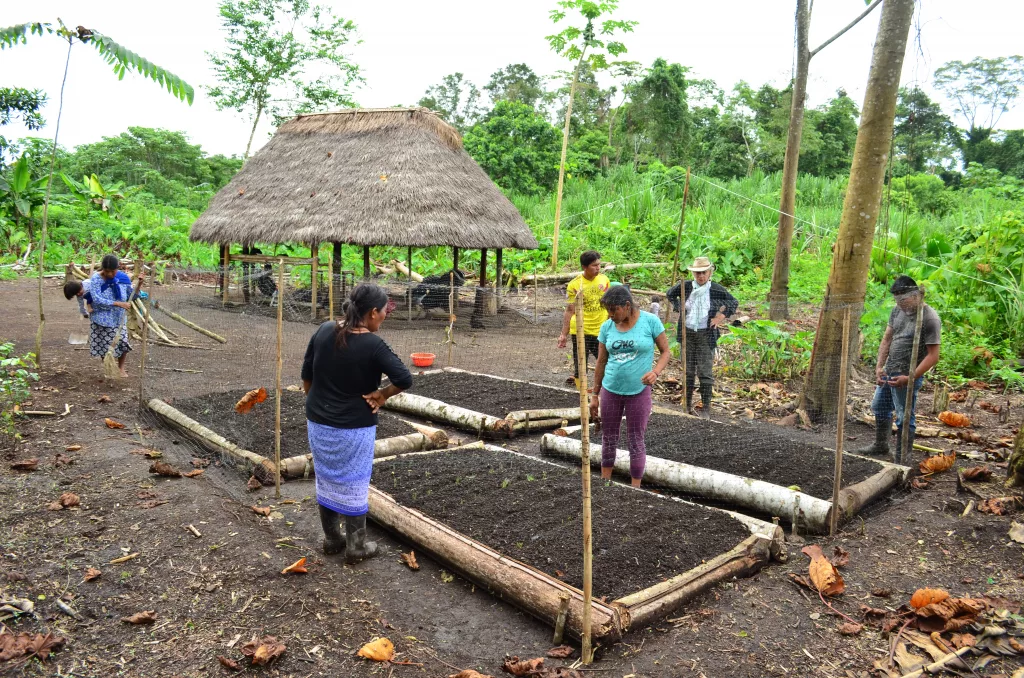
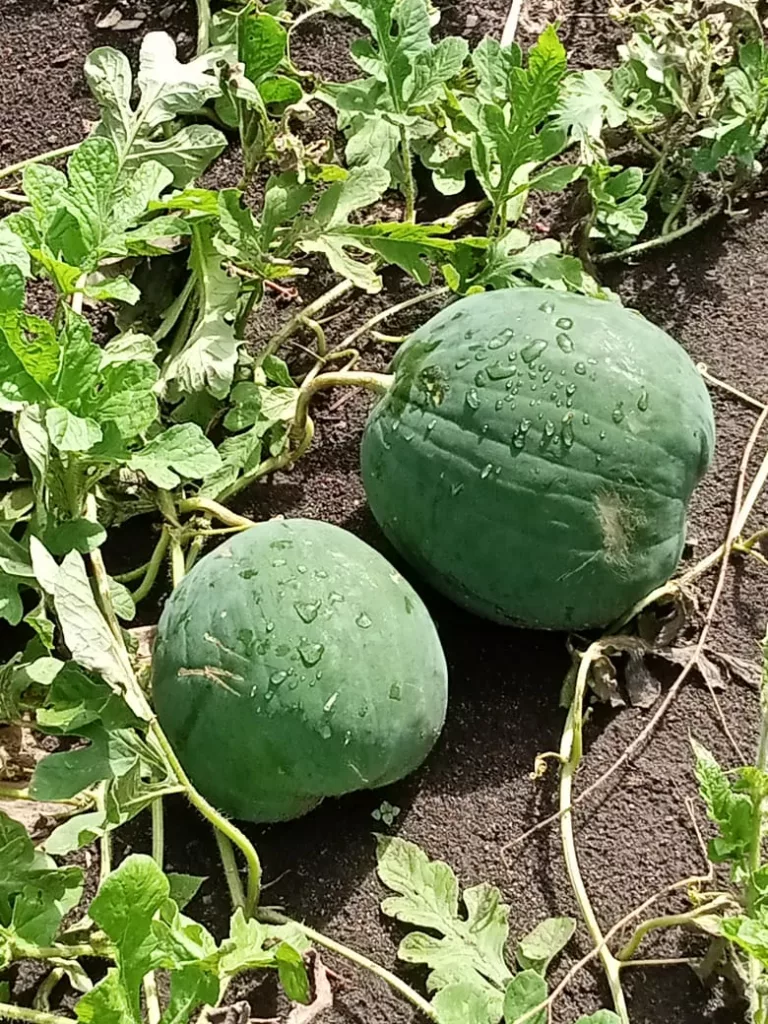
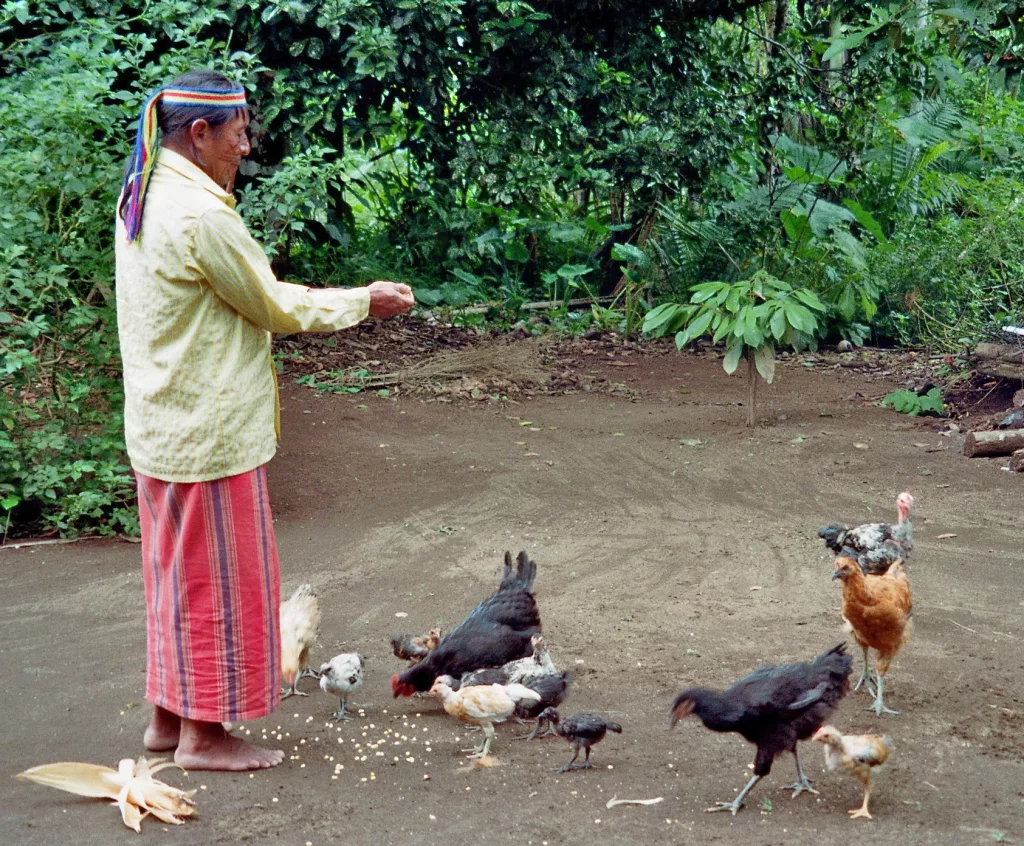
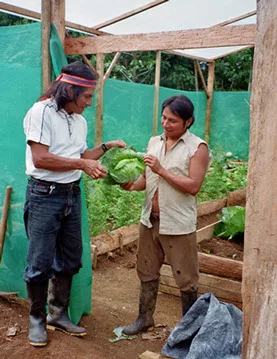
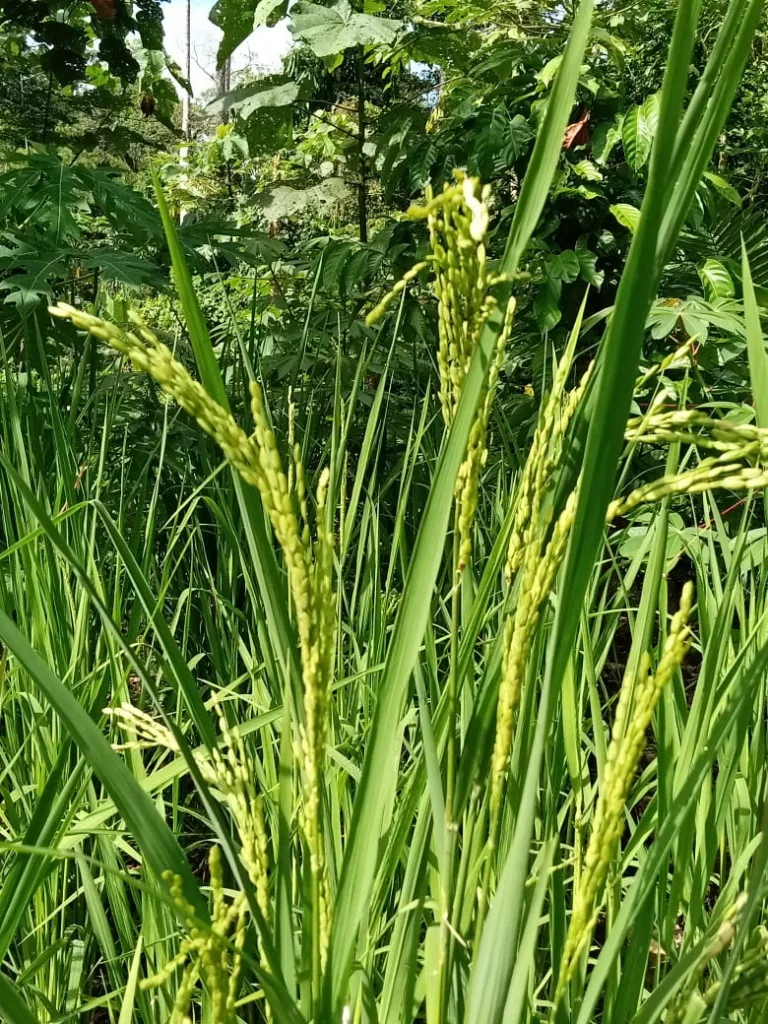
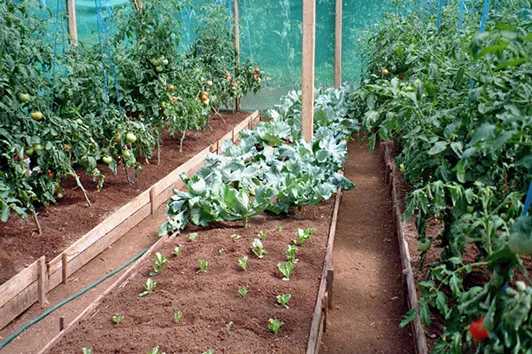
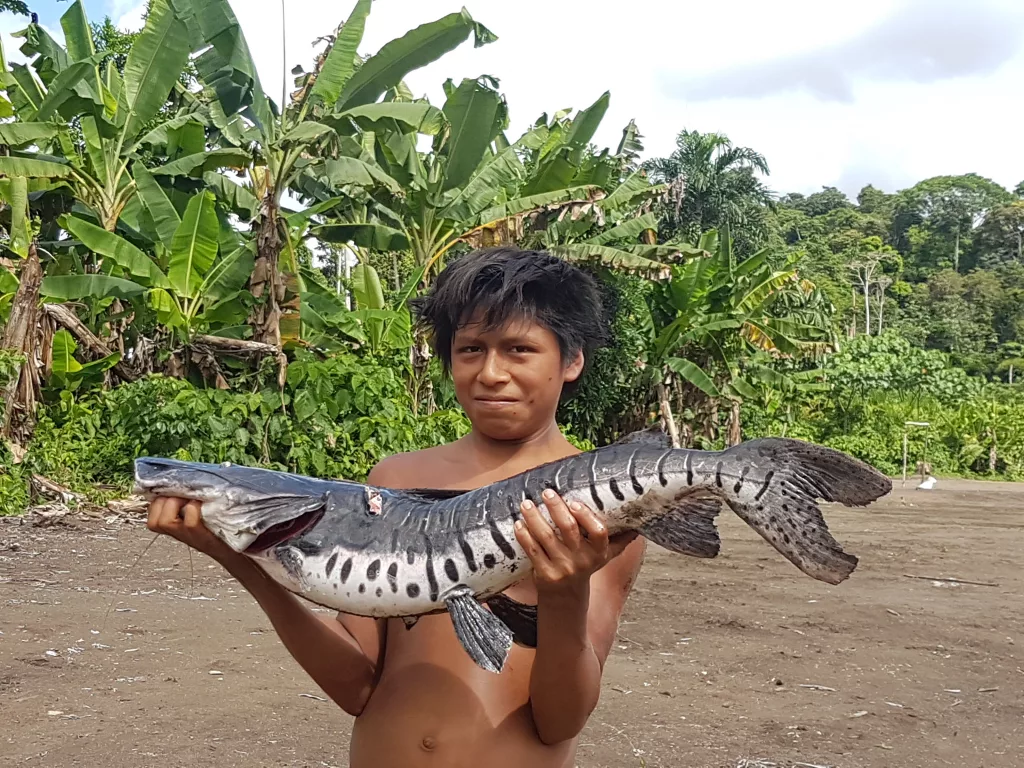
Organic cultivation in mixed crops and on a family basis: vegetables, fruit, and crops – Species-appropriate small animal husbandry: chickens, ducks, pigs, and suitable wild animals – Fish farming with indigenous species in natural ponds.
Improvement of cultivation methods and the processing of traditional products.
All of this is used for self-sufficiency and bartering and, in the event of overproduction, generates income through sales, for example, to the AMAZONICA Academy and neighboring villages.
Cooking courses
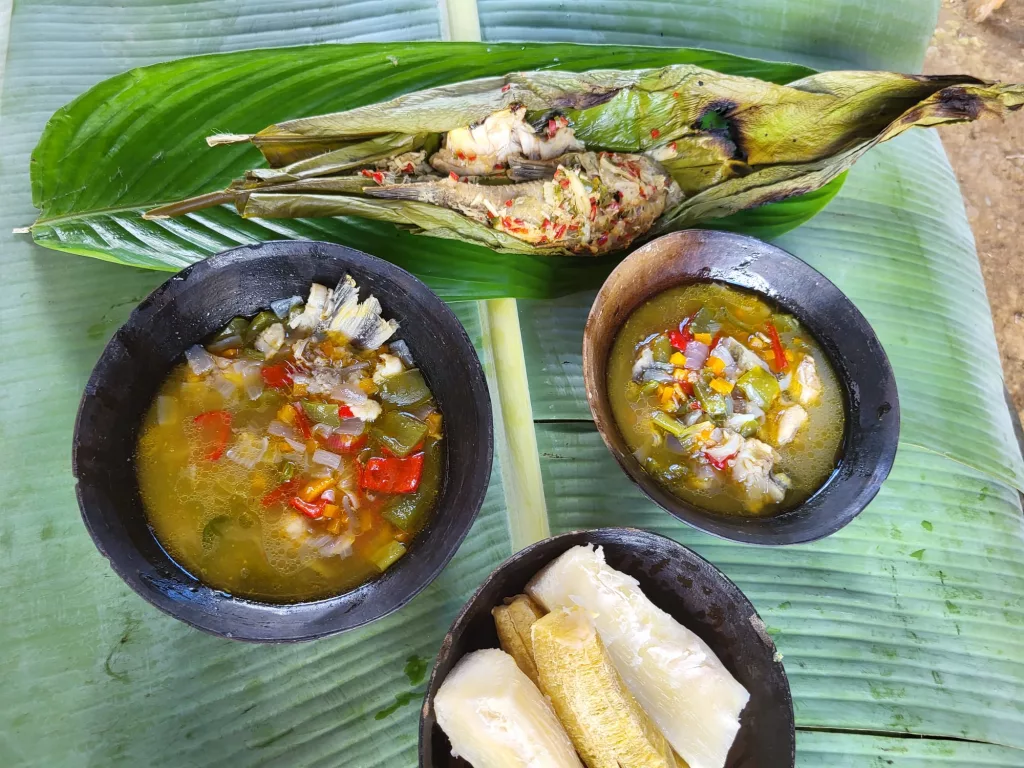
Of course, the women can cook in the forest. All indigenous peoples cook to ensure they have enough to eat. But the ingredients used by hunter-gatherers are limited to whatever is caught or ripening. Salt was not available in many areas, or at most, in barter. Fish soup, for example, for a family meant heating a 40-liter pot of water and boiling a few small fish in it – done! No spices except crushed chili peppers.
Boiled roots and tubers (yuca/manioc and bananas) are also served. Green vegetables are not known because nothing is cultivated.
All people at an early cultural stage do not know any recipes in our sense. Everything was eaten as it came from nature. They didn’t think about possible variations – the main thing was to be full.
That’s fine as long as the original world works, which is no longer the case today. The rainforest is not only being decimated from outside, but the indigenous people are also overtaxing the food sources in the forest due to rapid population growth.
So we have to rethink, produce new food, and learn to process it. In addition, many are considering receiving paying visitors, a form of scientific tourism with universities. International visitors don’t need luxury; they just want dishes that taste good, and there are also vegetarians among the young students who are happy with the vegetables that are “not harmful” to the indigenous children.
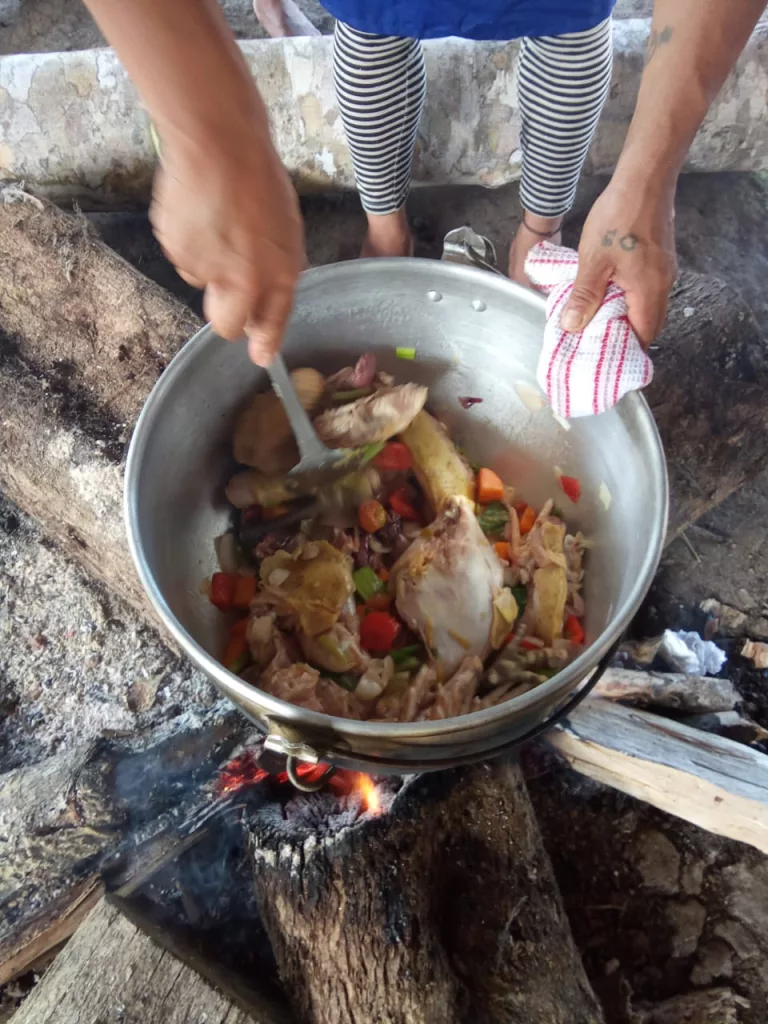
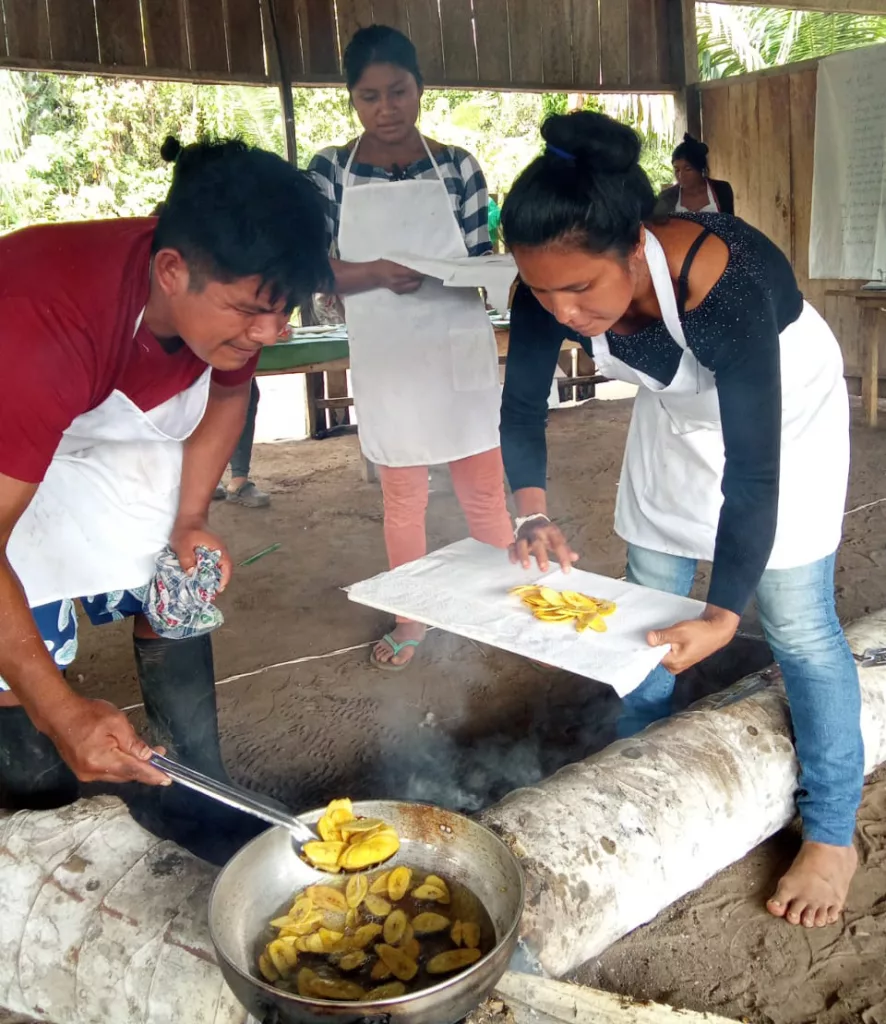
In her cooking courses, Mascha Kauka mainly teaches how existing products can be mixed and seasoned, and how new foods must be handled and can be combined.
These three to four-day courses are always a celebration for the whole village; everyone is integrated and motivated.
Cooking together is a door opener!
Renewable energies
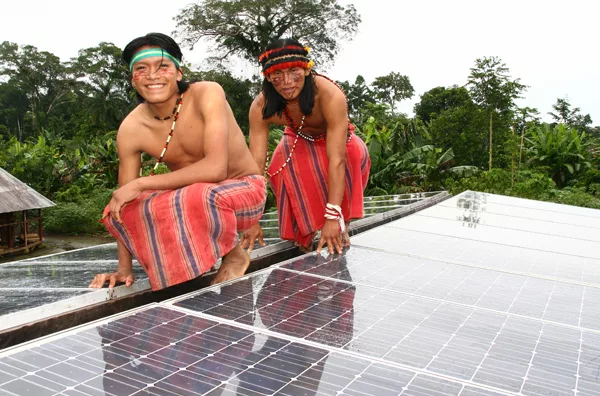
Every up-and-coming community needs electricity: for the small workshops and the drinking water pump, as well as for the internet, laptop, and light for studying in the evenings. At the equator, it gets dark at 6 pm!
In the middle of the forest, only a decentralized power supply from renewable energies makes sense. This is achieved through small solar systems on each house or a larger solar center per village.
If the batteries are not sufficiently charged due to the weather, it is a good idea to have a stand-by generator. Ideally, photovoltaics and a permanent power supply from water turbines complement each other.
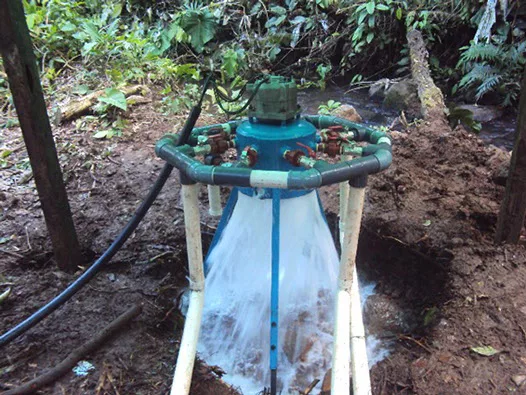
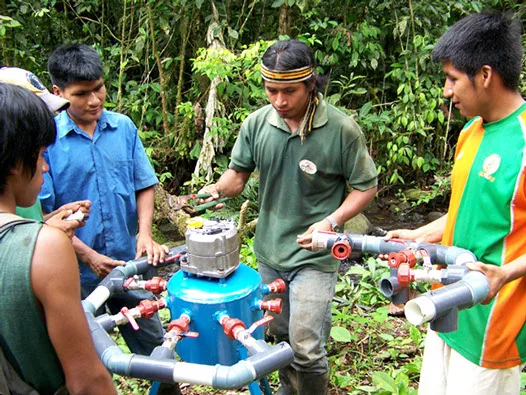
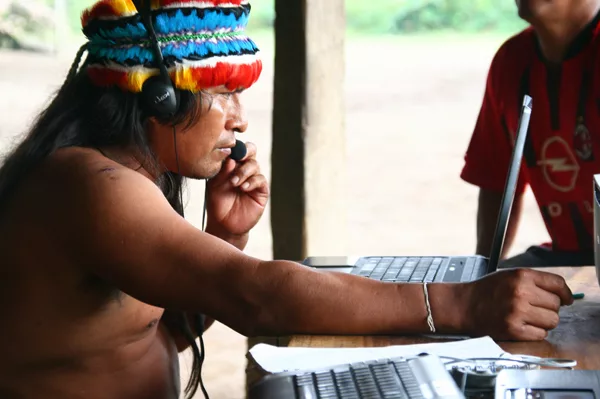
Where there are nearby watercourses with sufficient flow, small turbines are used to generate electricity. All water pipes and power cables are laid underground. We attach great importance to this for safety and aesthetic reasons, taking into account the “source of income from tourism”. The indigenous forest dwellers are proud of their tidy, modern villages in traditional style.
“Renewable energies” is rightly a popular subject because it points the way to the future. International universities and their students are very interested in testing the various known and new possibilities of decentralized power supply. The locations of the AMAZONICA Academy offer ideal conditions for this.
Municipal administration
The progress of families in a village would be jeopardized if the local council did not understand and fully support the measures. In addition, these local leaders must have confidence in their umbrella organization and know how to communicate with the country’s authorities. AMAZONICA staff hold regular workshops in the villages on all relevant topics. Some young people who have completed their school-leaving exams are also funded to study relevant subjects: Administration, Accounting, and Communication.
Would you like to get involved?
We would like to thank our friends and supporters





AMAZONICA Akademie gGmbH
Ostpreußenstr. 81
D-81927 Munich
Phone: 0049-(0)89-642 99 133
E-Mail: akademie@amazonica.org
amazonica.org
Navigation